
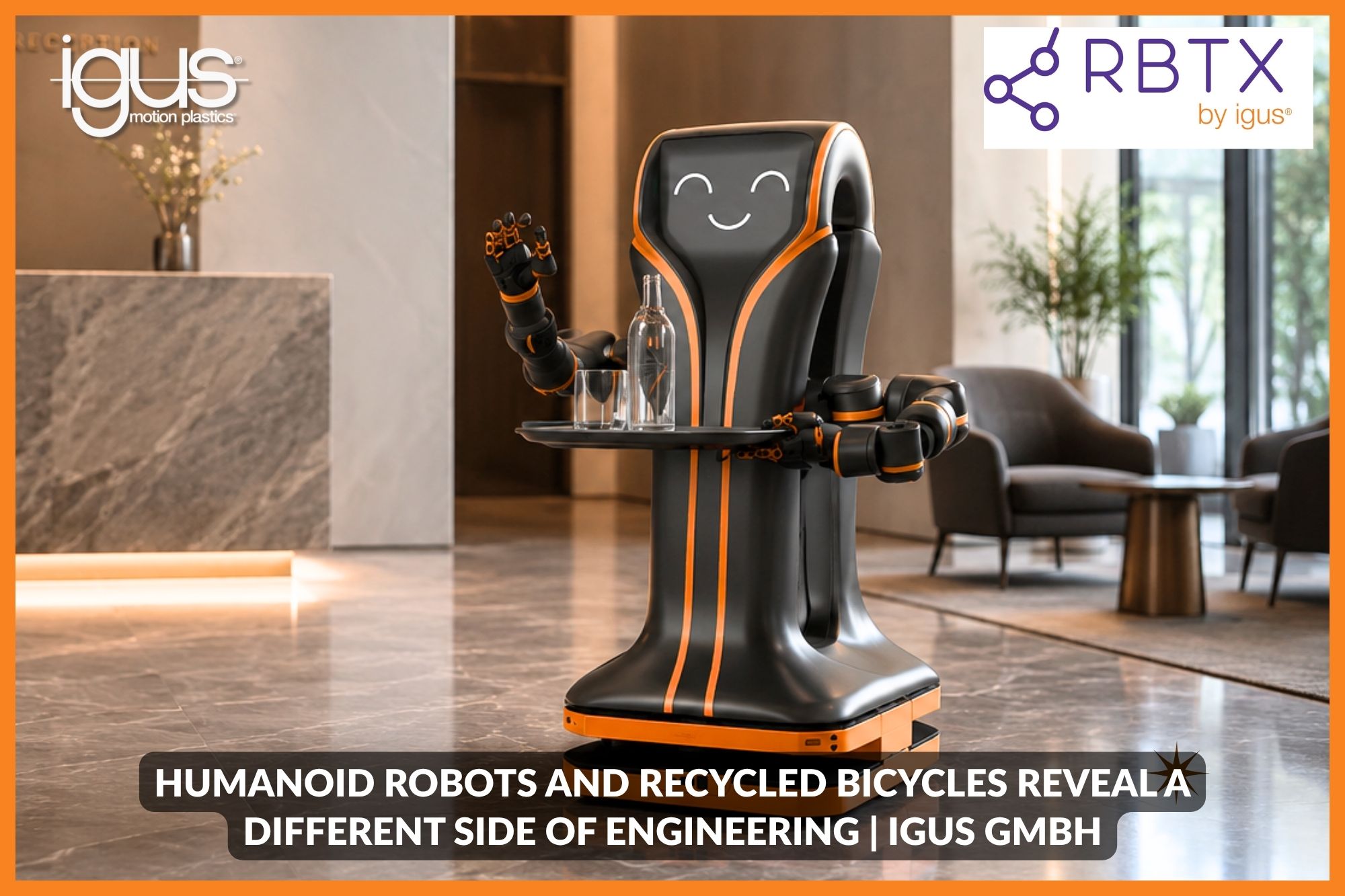
How Motion Plastics Are Finding Their Way Into Humanoid Robots and Sustainable Mobility | igus GmbH
18th June, 2026
Weekend cartoons, toy robots and science fiction blockbusters gave entire generations a glimpse of a future filled with intelligent machines. The idea seemed distant and almost magical. Few imagined that concepts once confined to cinema screens would eventually find applications inside factories, hospitals, retail environments and research laboratories.
That future is gradually taking commercial form.
Human imagination has often travelled ahead of engineering. Concepts such as video calls once appeared far removed from everyday life. Artificial intelligence sounded ambitious. Voice assistants and autonomous systems appeared unrealistic to many people. Today, they have become part of homes, workplaces and smartphones. Humanoid robotics appears to be entering a similar phase. The global market, valued between USD 4.2 billion and USD 6.2 billion in 2026, is projected to reach between USD 15 billion and USD 165 billion by 2034, supported by annual growth rates ranging between 35 and 50% (source: marketsandmarkets). Some analysts estimate the broader addressable opportunity could eventually exceed USD 5 trillion by 2050. Shipment volumes, which stood between 14,500 and 18,000 units during 2025, are expected to rise sharply as industries grapple with labour shortages and search for greater flexibility.
This transformation is encouraging companies to rethink conventional engineering, and German motion plastics specialist igus sees substantial potential across robotics, automation and mobility. Widely recognised for lubrication-free engineering products, igus has steadily expanded its bandwidth into robotics, artificial intelligence, mobility and resource-conscious technologies.
At Hannover Messe 2026, the company introduced 227 innovations under the theme “Improve What Moves”, presenting a vision that connects advanced materials, intelligent automation and green technologies with applications influencing both industry and everyday life.
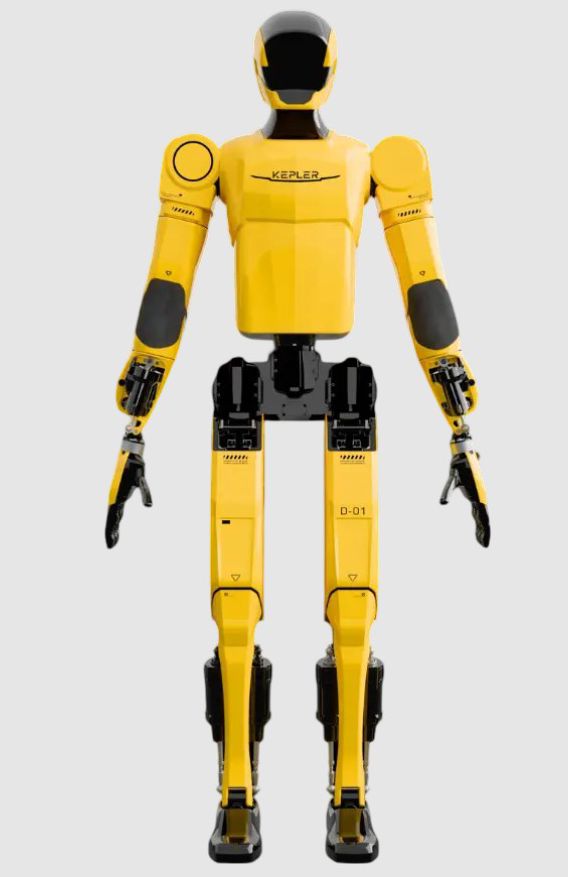
Humanoid robotics occupied a prominent position within that vision. Instead of treating humanoids as concepts reserved for giant corporations, igus is pursuing accessibility and affordability. Through its RBTX marketplace, businesses can access nearly 100 humanoid robots and more than 600 robotic solutions designed for assembly, logistics, inspection and service applications. Certain systems are available below €20,000 including controllers.
Free feasibility studies and personalised engineering consultations are made to simplify adoption for businesses seeking practical automation without complicated integration.
Among the developments attracting attention is Iggy Rob, the company’s first humanoid platform. Built around ReBeL cobot arms and the ReBeL Move mobile base, the system combines mobility with natural interaction. Assistance applications, industrial operations, education and research represent some of its initial areas of deployment. Human-like movement makes activities involving machine tending, inspection, repetitive handling and logistics support increasingly practical. Retail environments, healthcare facilities and disaster response operations also present considerable opportunities where adaptability becomes essential.
Humanoid automation has often been associated with expensive infrastructure and highly specialised expertise. igus believes a different model can accelerate adoption. Companies can configure robots using the RBTX platform, selecting vision systems, grippers, controllers and accessories according to application requirements. Greater flexibility, improved ergonomics and reduced process costs are encouraging manufacturers to view humanoids as a serious commercial opportunity rather than a distant concept.
What makes the approach particularly interesting is the role played by motion plastics. Humanoid systems contain numerous moving elements requiring lightweight construction and durability. Self-lubricating materials developed by igus address this challenge through plain bearings, spherical bearings, rod ends, slewing rings, energy supplies, linear guides and gear systems. PRT slewing rings support neck movement. ReBeL strain wave gears find applications within arms. Igubal spherical bearings contribute to wrists. Apiro gearboxes assist hip kinematics. Drygear worm gears support knee movement. Iglidur J bearings enable finger articulation. Chainflex cables perform effectively inside confined spaces. Lead screws and linear guides contribute to smooth movement within legs. Multi-axis energy chains support energy transmission through the back area, and special components manufactured through 3D printing provide customised geometries.
The materials themselves represent a significant departure from conventional approaches. Incorporated solid lubricants eliminate external lubrication requirements and reduce maintenance. Resistance against dust, dirt and moisture allows operation under challenging conditions. Lower weight compared with metallic alternatives contributes additional advantages. Certain igubal bearings offer cost reductions approaching 40% and weigh nearly 80% less than metal versions. Such characteristics become increasingly valuable as humanoids transition towards large-scale deployment.
Applications are expanding rapidly. Healthcare institutions can utilise assistance robots for human-centric support activities. Retail environments can benefit through customer service and handling functions. Production facilities can deploy humanoids for repetitive tasks and quality inspection. Research laboratories and educational institutions are employing modular robotic platforms for artificial intelligence development, computer vision and human-machine interaction studies. Flexibility and accessibility are becoming defining themes across the sector.
Sustainability occupies an equally important position within the igus philosophy. Renewable energy infrastructure frequently operates under harsh environmental conditions involving ultraviolet radiation, dust, humidity and temperature fluctuations. Motion plastic solutions developed by the company are corrosion-resistant, weatherproof and maintenance-free, with a predictable service life. Circular economy programmes and recycled materials have become central themes as industries seek alternatives capable of balancing functionality with environmental responsibility.
An equally fascinating example of this philosophy appears through a project that initially sounds unconventional.
A bicycle built largely through recycled plastic.
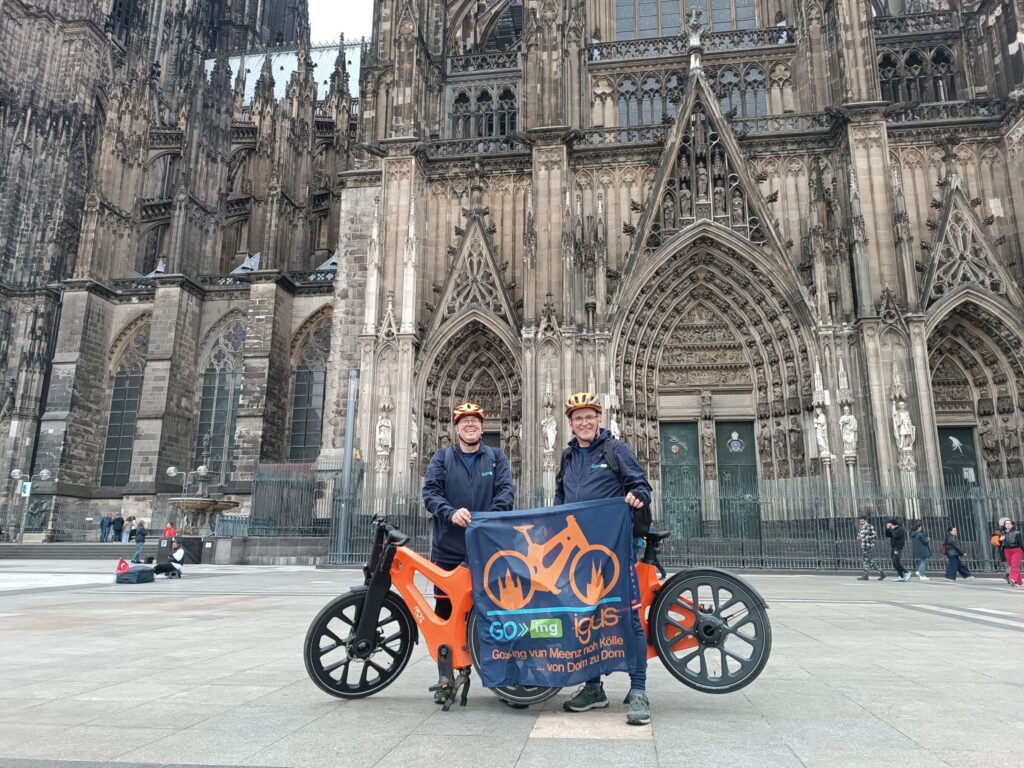
The igus:bike represents an entirely different interpretation of engineering innovation. Manufactured using up to 90% recycled plastic, including discarded fishing nets and household waste such as shampoo bottles, the bicycle eliminates corrosion concerns and requires neither lubrication nor extensive maintenance. Bearings, drivetrain systems and freewheels operate without oils, allowing resistance against dirt and wear. Approximately half of its components originate through recycled material streams, and local production initiatives are being explored to support zero-emission mobility programmes across several countries, including India.
The igus:bike world tour recently returned to Germany with an endurance ride undertaken by GO>>ing magazine editors Michael Kleine and Dirk Schaar. Covering approximately 235 kilometres between Mainz and Cologne, the route encountered rain, mud and strong winds, creating demanding conditions throughout the experience. Historic landmarks and engineering heritage formed part of the backdrop, and the polymer bicycle demonstrated its capabilities well outside laboratories and exhibition halls. Additional participants joined during the final leg before the group reached Cologne Cathedral after travelling through riverside pathways and urban centres.
The significance of the exercise reached deeper than a cycling expedition, offering an interesting example of how engineering concepts can thrive under real-world conditions and support a new approach towards low-carbon transportation. Mobility systems across the globe are increasingly seeking alternatives capable of reducing maintenance requirements and resource consumption, and the igus:bike offered an encouraging example of how material science and recycled materials could influence everyday commuting. Manufactured using up to 90% recycled plastic, including discarded fishing nets and household waste, the bicycle demonstrates how innovative engineering can redefine personal transportation in unexpected ways.
Viewed independently, humanoid robots and recycled bicycles appear unrelated, although together they reveal a broader transformation taking place across engineering. Human-machine collaboration, accessible automation, sustainable materials and resource-conscious mobility are gradually becoming part of daily life in ways that previous decades could only dream of through books, animation and cinema. Curiosity inspired those visions, while engineers and researchers are translating portions of them into practical applications. As society begins witnessing the advent of humanoids, maintenance-free transportation and increasingly intelligent systems, one cannot help but wonder whether humanity is merely observing the opening pages of a much larger technological tomorrow where entirely new possibilities around circular mobility and human-machine coexistence are still waiting somewhere beyond today’s horizon.
For media enquiries, connect at: narendra@synthesisindia.in
Visit: www.synthesisindia.in