Phoenix Contact Presents Networked Energy Systems and DC Grid Innovation Ahead of HANNOVER MESSE 2026
HANNOVER, GERMANY:
The global industrial economy is entering a decisive phase in which electrification, automation, and digital infrastructure are converging into integrated energy systems that extend across factories, mobility networks, and critical infrastructure. According to European energy data, renewable sources surpassed fossil fuels in electricity generation within the European Union during 2025, marking a structural shift in the global energy transition. At the same time, long-term infrastructure projections indicate that more than 90 million kilometres of new power grids and tens of thousands of large solar parks will be required by 2050. These developments are reshaping the technological priorities of manufacturing companies as they move toward electrified, digitally managed production environments.
Against this backdrop, Phoenix Contact presented its technological strategy during the HANNOVER MESSE Press Preview 2026, held on 24 and 25 February in Hannover, Germany. The event offered international media early insight into technologies that will be displayed at HANNOVER MESSE 2026, scheduled for April 20 to April 24 at the Hannover Exhibition Grounds. Recognised as the world’s leading industrial technology trade fair, the upcoming edition will focus on industrial transformation through automation, artificial intelligence, renewable energy, and digitalisation, with Brazil serving as the official partner country.
Founded in 1923 and headquartered in Blomberg, Germany, Phoenix Contact has developed into a global provider of industrial automation, electrical interconnection, and digitalisation technologies. The family-owned company employs more than 22,000 people worldwide and reported revenues of €3.346 billion in 2025. Its solutions connect, distribute, and control power and data flows across industries including renewable energy, electric mobility, mechanical engineering, and building infrastructure. The company’s long-term technological vision is guided by the concept of the All Electric Society, an integrated energy ecosystem based on renewable generation, digital connectivity, and intelligent energy management.
During the press preview, Phoenix Contact outlined how the industrial sector is confronting a complex combination of structural pressures that include regulatory expansion, fragile supply chains, geopolitical tensions, and climate-driven transformation of energy systems. In response, the company has adopted a strategy centred on regional proximity to customers through a distributed global production network. Manufacturing facilities operate across Mexico, Turkey, Vietnam, India, and China, supported by logistics hubs and a network of application centres in Europe, North America, and Asia. These centres provide collaborative environments where industrial partners examine operational challenges and develop application-specific engineering solutions.
A central theme of the presentation was the growing role of direct current technology within industrial energy systems. Phoenix Contact demonstrated how DC microgrids can support more efficient integration of renewable energy, battery storage, and electric mobility infrastructure inside factories. Compared with conventional alternating current architectures, DC-based systems reduce conversion losses, simplify energy storage integration, and allow recuperation of energy generated by moving systems such as robots or automated warehouses.
According to Dr. Martin Wetter, Executive Vice President at Phoenix Contact, industrial DC infrastructure is becoming a critical component of modern energy systems.
“Direct current grids open new design possibilities for factory energy systems,” he explained. “They enable the direct integration of renewable generators, battery storage, and recuperation energy while reducing conversion losses across the entire system.” Phoenix Contact demonstrated these concepts through its All Electric Society Factory, an industrial environment that integrates renewable power generation, energy storage, and digital energy management within a unified architecture. The facility combines photovoltaic systems, battery storage, bidirectional electric vehicle charging, heat pumps, and large thermal storage installations within a coordinated energy management framework. The factory also incorporates a 650-volt DC grid, allowing energy produced by solar installations to be used directly by manufacturing systems with minimal conversion.
The energy infrastructure also connects with additional technologies, including hydrogen production through electrolysis and energy recovery through fuel cells. This multi-energy configuration integrates electricity, heat, and hydrogen within a single operational system, demonstrating how sector coupling can support highly efficient industrial environments.
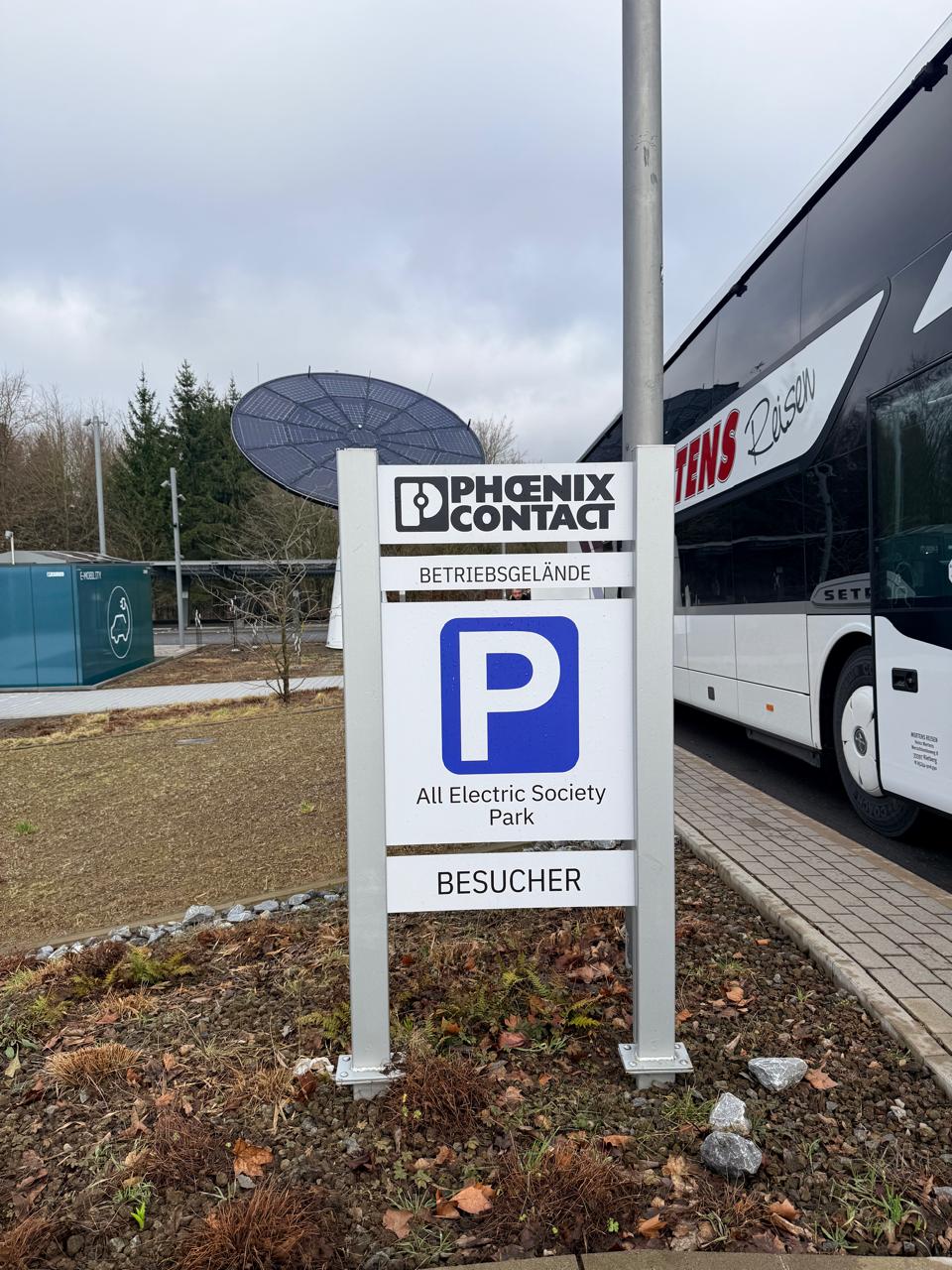
Observing the system architecture during the factory walkthrough provided a compelling illustration of how industrial energy systems are evolving. The integration of renewable generation, storage technologies, digital monitoring, and electrified production lines within a single operational environment demonstrates a practical pathway toward energy-efficient manufacturing. Rather than functioning as isolated installations, these technologies operate as interconnected systems where energy flows dynamically between infrastructure, production equipment, and mobility applications. This approach illustrates how future factories may operate with significantly higher energy efficiency while maintaining operational flexibility and resilience in increasingly complex industrial environments.
Another key technological focus concerns the digitalisation of control cabinet manufacturing, an industry that forms a central component of electrical infrastructure worldwide. According to Phoenix Contact estimates, approximately 5.5 million control cabinets will be required globally by 2030 as new power grids, renewable installations, and electrified infrastructure are deployed. At present, the sector remains heavily dependent on manual processes, while 88 percent of companies report shortages of skilled personnel. Dr. Andreas Schreiber, Vice President Industrial Cabinet Solutions at Phoenix Contact, emphasised that digitalisation and automation will significantly transform this sector.
“Industrial control cabinet building is undergoing profound change,” Schreiber noted. “Driven by the shortage of skilled workers, the energy transition, and the growing complexity of electrical systems, digitalisation and process optimisation are becoming essential.” Phoenix Contact is addressing this transformation through digital engineering platforms such as Clipx Engineer, which connects engineering design systems with automated production equipment. Technologies including Push-X connection technology and the CLIPX MASTERline automated terminal strip assembly system illustrate how digital workflows can improve productivity while reducing production errors. At HANNOVER MESSE 2026, Phoenix Contact will present its technologies in Automation Hall 27, Booth G26, highlighting four central themes that define its industrial strategy: power reliability, safe automation, efficient control cabinet building, and integrated connection technology. Solutions on display will include power supply systems, surge protection technologies, modular automation architectures, and advanced connection technologies such as Single Pair Ethernet, which supports modern machine communication within industrial networks.
From an on-site perspective during the press preview and factory visit, the scale of the technological transformation becomes particularly evident. The demonstration of a fully operational DC microgrid environment illustrates how energy generation, storage, and industrial consumption can function within an integrated ecosystem. Instead of isolated energy systems operating independently, the factory environment shows how renewable electricity, electric mobility infrastructure, and manufacturing processes can operate within a coordinated energy framework. This approach illustrates the broader direction of industrial infrastructure development. Electrified factories, digital energy management platforms, and intelligent automation architectures are gradually becoming central components of modern manufacturing ecosystems. Technologies that connect energy generation, industrial processes, and digital monitoring systems will play an increasingly important role as industrial sectors adapt to energy transition requirements.
As the global industrial community prepares for HANNOVER MESSE 2026, where more than 3,500 exhibitors are expected to present new technologies, the themes demonstrated by Phoenix Contact provide a glimpse of the infrastructure that will underpin future industrial systems. Electrified factories, direct current energy grids, and digitalised production architectures represent a significant step toward the next phase of industrial development.
With the transition toward electrified infrastructure accelerating across industries, the technologies being demonstrated in Hannover illustrate how engineering innovation continues to redefine the relationship between energy systems, industrial production, and digital technologies.
Against this backdrop, Phoenix Contact presented its technological strategy during the HANNOVER MESSE Press Preview 2026, held on 24 and 25 February in Hannover, Germany. The event offered international media early insight into technologies that will be displayed at HANNOVER MESSE 2026, scheduled for April 20 to April 24 at the Hannover Exhibition Grounds. Recognised as the world’s leading industrial technology trade fair, the upcoming edition will focus on industrial transformation through automation, artificial intelligence, renewable energy, and digitalisation, with Brazil serving as the official partner country.
Founded in 1923 and headquartered in Blomberg, Germany, Phoenix Contact has developed into a global provider of industrial automation, electrical interconnection, and digitalisation technologies. The family-owned company employs more than 22,000 people worldwide and reported revenues of €3.346 billion in 2025. Its solutions connect, distribute, and control power and data flows across industries including renewable energy, electric mobility, mechanical engineering, and building infrastructure. The company’s long-term technological vision is guided by the concept of the All Electric Society, an integrated energy ecosystem based on renewable generation, digital connectivity, and intelligent energy management.
During the press preview, Phoenix Contact outlined how the industrial sector is confronting a complex combination of structural pressures that include regulatory expansion, fragile supply chains, geopolitical tensions, and climate-driven transformation of energy systems. In response, the company has adopted a strategy centred on regional proximity to customers through a distributed global production network. Manufacturing facilities operate across Mexico, Turkey, Vietnam, India, and China, supported by logistics hubs and a network of application centres in Europe, North America, and Asia. These centres provide collaborative environments where industrial partners examine operational challenges and develop application-specific engineering solutions.
A central theme of the presentation was the growing role of direct current technology within industrial energy systems. Phoenix Contact demonstrated how DC microgrids can support more efficient integration of renewable energy, battery storage, and electric mobility infrastructure inside factories. Compared with conventional alternating current architectures, DC-based systems reduce conversion losses, simplify energy storage integration, and allow recuperation of energy generated by moving systems such as robots or automated warehouses.
According to Dr. Martin Wetter, Executive Vice President at Phoenix Contact, industrial DC infrastructure is becoming a critical component of modern energy systems.
“Direct current grids open new design possibilities for factory energy systems,” he explained. “They enable the direct integration of renewable generators, battery storage, and recuperation energy while reducing conversion losses across the entire system.” Phoenix Contact demonstrated these concepts through its All Electric Society Factory, an industrial environment that integrates renewable power generation, energy storage, and digital energy management within a unified architecture. The facility combines photovoltaic systems, battery storage, bidirectional electric vehicle charging, heat pumps, and large thermal storage installations within a coordinated energy management framework. The factory also incorporates a 650-volt DC grid, allowing energy produced by solar installations to be used directly by manufacturing systems with minimal conversion.
The energy infrastructure also connects with additional technologies, including hydrogen production through electrolysis and energy recovery through fuel cells. This multi-energy configuration integrates electricity, heat, and hydrogen within a single operational system, demonstrating how sector coupling can support highly efficient industrial environments.
Observing the system architecture during the factory walkthrough provided a compelling illustration of how industrial energy systems are evolving. The integration of renewable generation, storage technologies, digital monitoring, and electrified production lines within a single operational environment demonstrates a practical pathway toward energy-efficient manufacturing. Rather than functioning as isolated installations, these technologies operate as interconnected systems where energy flows dynamically between infrastructure, production equipment, and mobility applications. This approach illustrates how future factories may operate with significantly higher energy efficiency while maintaining operational flexibility and resilience in increasingly complex industrial environments.
Another key technological focus concerns the digitalisation of control cabinet manufacturing, an industry that forms a central component of electrical infrastructure worldwide. According to Phoenix Contact estimates, approximately 5.5 million control cabinets will be required globally by 2030 as new power grids, renewable installations, and electrified infrastructure are deployed. At present, the sector remains heavily dependent on manual processes, while 88 percent of companies report shortages of skilled personnel. Dr. Andreas Schreiber, Vice President Industrial Cabinet Solutions at Phoenix Contact, emphasised that digitalisation and automation will significantly transform this sector.
“Industrial control cabinet building is undergoing profound change,” Schreiber noted. “Driven by the shortage of skilled workers, the energy transition, and the growing complexity of electrical systems, digitalisation and process optimisation are becoming essential.” Phoenix Contact is addressing this transformation through digital engineering platforms such as Clipx Engineer, which connects engineering design systems with automated production equipment. Technologies including Push-X connection technology and the CLIPX MASTERline automated terminal strip assembly system illustrate how digital workflows can improve productivity while reducing production errors. At HANNOVER MESSE 2026, Phoenix Contact will present its technologies in Automation Hall 27, Booth G26, highlighting four central themes that define its industrial strategy: power reliability, safe automation, efficient control cabinet building, and integrated connection technology. Solutions on display will include power supply systems, surge protection technologies, modular automation architectures, and advanced connection technologies such as Single Pair Ethernet, which supports modern machine communication within industrial networks.
From an on-site perspective during the press preview and factory visit, the scale of the technological transformation becomes particularly evident. The demonstration of a fully operational DC microgrid environment illustrates how energy generation, storage, and industrial consumption can function within an integrated ecosystem. Instead of isolated energy systems operating independently, the factory environment shows how renewable electricity, electric mobility infrastructure, and manufacturing processes can operate within a coordinated energy framework. This approach illustrates the broader direction of industrial infrastructure development. Electrified factories, digital energy management platforms, and intelligent automation architectures are gradually becoming central components of modern manufacturing ecosystems. Technologies that connect energy generation, industrial processes, and digital monitoring systems will play an increasingly important role as industrial sectors adapt to energy transition requirements.
As the global industrial community prepares for HANNOVER MESSE 2026, where more than 3,500 exhibitors are expected to present new technologies, the themes demonstrated by Phoenix Contact provide a glimpse of the infrastructure that will underpin future industrial systems. Electrified factories, direct current energy grids, and digitalised production architectures represent a significant step toward the next phase of industrial development.
With the transition toward electrified infrastructure accelerating across industries, the technologies being demonstrated in Hannover illustrate how engineering innovation continues to redefine the relationship between energy systems, industrial production, and digital technologies.
For more information, visit: www.phoenixcontact.com/en-pc/hannover-messe
“Being on site in Hannover offered a rare opportunity to observe how industrial energy systems are evolving in real operational environments. The integration of DC grids, renewable power, digital monitoring, and electrified production at Phoenix Contact’s All Electric Society Factory illustrates how manufacturing infrastructure is entering a new technological phase. These developments show how the next generation of factories will increasingly operate as interconnected energy and data systems rather than isolated production units.”
— Narendra Lindait, Director, Synthesis