Schaeffler Showcases Humanoid Robotics Technologies and Autonomous Intralogistics Solutions Ahead of HANNOVER MESSE 2026
Industrial automation and advanced motion systems are entering a new phase as robotics, artificial intelligence, and intelligent mechanical systems converge within modern manufacturing environments. The global robotics market is projected to expand significantly during the coming decade as factories pursue higher efficiency, flexible production lines, and data-driven industrial processes. At the same time, the demand for precision components, intelligent bearings, actuators, and motion systems continues to increase as automation expands across logistics, manufacturing, and emerging robotics applications.
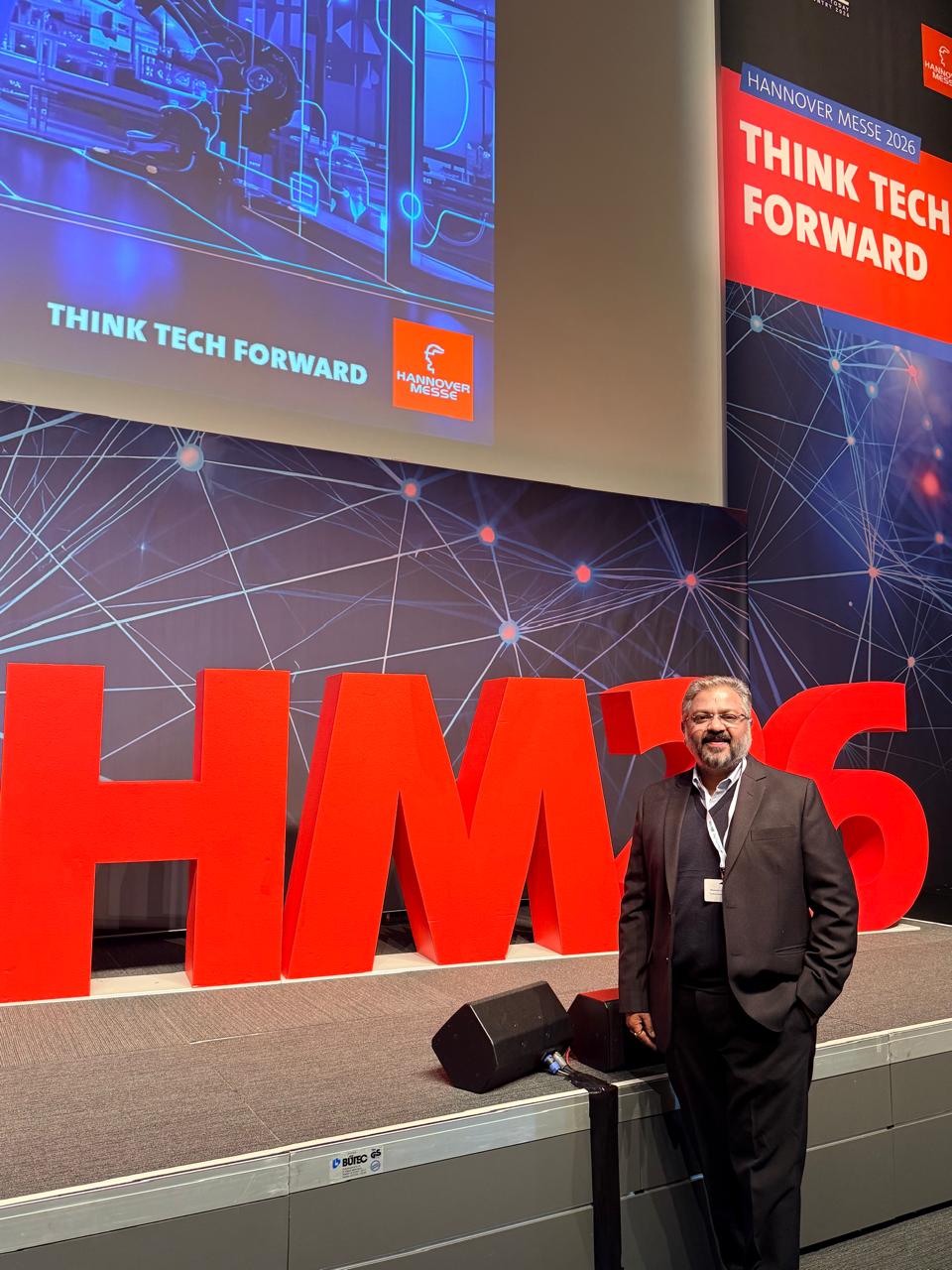
These developments formed part of the discussions during the HANNOVER MESSE Press Preview 2026, held on 24 and 25 February in Hannover, Germany, where international media gathered to gain early insights into technologies that will be presented at HANNOVER MESSE 2026, scheduled from April 20 to April 24 in Hannover. Recognised as the world’s leading industrial technology trade fair, the upcoming edition will focus on industrial transformation through automation, artificial intelligence, renewable energy, and digitalisation. Brazil will participate as the official partner country, highlighting global industrial collaboration and technological exchange.
Among the technology companies presenting their developments during the press preview was Schaeffler Group, a global engineering company widely known for precision motion technology and advanced mechanical systems. Founded in 1946 and headquartered in Herzogenaurach, Germany, the company operates across automotive and industrial sectors with technologies that include high-precision bearings, drive systems, and intelligent monitoring solutions. With around 110,000 employees and more than 250 locations across 55 countries, Schaeffler remains one of the largest family-owned technology companies in the world. Its brands INA, FAG, and LuK are globally recognised for bearing solutions, clutch systems, and motion technologies used across industrial machinery, mobility systems, and advanced manufacturing environments.
At HANNOVER MESSE 2026, Schaeffler will present an expanded portfolio organised into eight product families, covering the entire spectrum of motion technology ranging from drive systems and precision bearings to renewable energy applications and intelligent service solutions. The company will place particular emphasis on humanoid robotics and autonomous intralogistics systems, two rapidly expanding sectors within industrial automation.
According to Uwe Wagner, Chief Technology Officer of Schaeffler AG, the company views robotics as a significant technological frontier.
“Schaeffler stands for innovative strength and continuous technological advancement,” Wagner explained while outlining the company’s approach to future applications. “Using humanoid robots as an example, we demonstrate how technological expertise from different divisions can be combined to expand into new growth fields.”
One of the highlights of Schaeffler’s presence at the upcoming Hannover Messe will be a transparent humanoid robot synchronized with a digital hologram, designed to demonstrate how individual mechanical components function inside robotic systems. The exhibit will visually illustrate Schaeffler’s integrated linear and rotary actuators, components that represent a significant portion of the mechanical architecture within humanoid robots. Through this interactive installation, visitors will gain insights into how precision motion systems enable robotic mobility and functional performance.
Schaeffler’s technological contributions to robotics build upon decades of experience in automotive engineering and industrial manufacturing. By applying proven engineering solutions developed for vehicle powertrains and industrial equipment, the company is transferring mechanical expertise into the rapidly developing robotics sector. Through collaborations with research institutions and industry partners, Schaeffler aims to position itself as a preferred technology partner for companies developing next-generation humanoid robots.
Alongside robotics, the company will also demonstrate solutions designed to advance autonomous intralogistics systems, which are increasingly becoming a central component of modern manufacturing and warehouse operations. Intralogistics automation integrates technologies such as automated guided vehicles, conveyor systems, sensors, and monitoring platforms to optimise material handling within industrial facilities.
During its exhibition at Hannover Messe, Schaeffler will present a modular intralogistics system featuring an automated guided forklift combined with a chain belt conveyor, illustrating how precision mechanical components and digital monitoring systems work together within automated logistics environments. These systems incorporate rolling bearings, linear motion technologies, electromechanical components, and condition monitoring technologies that enhance operational efficiency and system performance.
Another important development being highlighted is Schaeffler’s OPTIME Ecosystem, a digital solution designed for predictive maintenance and smart lubrication management. The system integrates sensors capable of detecting vibration patterns and electrical anomalies within machinery, allowing early identification of mechanical faults and electrical disturbances. Maintenance teams receive notifications through a mobile application, enabling corrective measures before production interruptions occur.
Additional product highlights include hybrid bearing technologies, combining ceramic rolling elements with steel rings to protect machinery against electrical erosion damage. In the area of linear motion technology, Schaeffler will present the EWELLIX electromechanical linear actuators within the EMA modular system, designed for demanding industrial applications requiring high load capacity and extended service life.
Dr. Jochen Schröder, Regional CEO Europe at Schaeffler AG, noted during the press preview that Hannover Messe remains a central platform for demonstrating technological developments to global industry audiences.
“The Hannover Messe offers Schaeffler an ideal showcase for presenting innovative technologies to existing and future customers,” Schröder explained. “Our focus this year lies on applications designed for fast-growing sectors, including humanoid robotics and autonomous intralogistics systems.”
Visitors attending HANNOVER MESSE 2026 will be able to explore Schaeffler’s technologies at Hall 13, Booth E60, where the company will present its complete motion technology portfolio and conduct a press briefing on April 20 during the opening day of the exhibition.
Engineering systems that enable movement within machines, robots, and industrial equipment often operate behind the scenes, yet they form the mechanical foundation of modern industrial automation. Technologies developed by companies such as Schaeffler demonstrate how precision engineering, digital monitoring, and advanced robotics are converging to redefine the capabilities of manufacturing and logistics systems.
As the global industrial community prepares to gather in Hannover for HANNOVER MESSE 2026, with more than 3,500 exhibitors expected, innovations in robotics, automation, and intelligent motion technology will remain central themes. The developments presented by Schaeffler illustrate how mechanical engineering continues to evolve alongside digital technologies, supporting the next phase of industrial transformation in manufacturing, robotics, and advanced logistics environments worldwide.
For more details, visit: https://www.schaeffler.com/en/media/dates-events/hannover-messe/
“Hannover Messe 2026 highlights the pace at which industries are moving toward connected and automated systems. Schaeffler’s developments in robotics and intralogistics point to how motion technologies are becoming central to these changes. It is interesting to see how established engineering capabilities are being applied to create systems that can operate with greater autonomy and responsiveness.”
— Narendra Lindait, Director, Synthesis