









Millions of consumers purchase an iPhone each year, although very few know the companies manufacturing its camera modules, battery management systems, connectors, printed circuit boards, sensors, fasteners, or countless electronic assemblies housed inside the device. Apple earns the spotlight. Hundreds of supplier firms receive purchase orders.
The same principle applies almost everywhere. A shopper selecting premium cosmetics seldom knows who formulated the active ingredients. Someone purchasing packaged food rarely identifies who produced the packaging material. Automobile owners know the vehicle, although hundreds create bearings, castings, wiring harnesses, fasteners, electronic control units, seating systems, braking components, lighting assemblies, and numerous assemblies that make each vehicle possible.
Indian MSMEs contribute significantly to the production ecosystem. Their portfolio entails automotive components exported worldwide, machinery, pharmaceutical formulations, equipment, furniture, electrical equipment, packaging materials, software, consumer goods, precision tools, electronics, textiles, and specialised solutions serving domestic as well as international markets. Quality benchmarks have improved drastically. Operating systems fulfil demanding global certifications. Export participation has expanded steadily. Despite these achievements, many remain known only within established networks because purchasing increasingly favours those occupying a memorable position before evaluations even begin.
Fair pricing, operational efficiency, credible delivery schedules, distributor relationships, and personal referrals traditionally formed the foundation of sectoral growth. Branding received comparatively limited attention because trade largely flowed through exhibitions, dealers, wholesalers, trade associations, physical catalogues, and established professional networks, serving participants effectively for many years.
Procurement decisions now occur much earlier. A procurement manager selecting equipment frequently visits a company’s website while requesting specifications. Retailers compare online reviews prior to making contact. International importers review certifications, case studies, corporate profiles, sustainability initiatives, exhibition participation, literature, client testimonials, and LinkedIn activity prior to negotiations. The first enquiry often comes only after extensive research.
Google introduced the Zero Moment of Truth (ZMOT) framework to explain this behavioural pattern. Instead of relying exclusively upon sales conversations, prospective clients research alternatives, assess reliability, review available information, and establish preferences before initiating contact. The marketplace has fundamentally changed as a result.
This represents one of the biggest strategic developments affecting Indian MSMEs during the past decade. Superior performance is certainly indispensable, although excellence alone hardly secures preference. Decision-makers are more likely to shortlist suppliers appearing credible, informative, professional, and accessible through multiple channels before comparing product specifications. Strong performance creates opportunity. Preference frequently determines who moves to the final shortlist.
Several breakthrough stories illustrate this principle. boAt built a loyal following through smart design, compelling digital content, influencer collaborations, and striking packaging. Mamaearth combined formulation quality with ingredient transparency and sustainability. Lenskart integrated physical stores, online convenience, and seamless service into a recognisable identity. Paper Boat transformed familiar beverages into a premium name through thoughtful packaging and emotional appeal. Zoho, Wakefit, and Zerodha each followed different paths, yet all invested consistently in sustained visibility alongside their core portfolio.
None of these examples suggest excellence alone determines outcomes. Inferior solutions seldom survive sustained scrutiny. Lasting trust develops when exceptional work is supported by strong visibility and consumer trust. One earns trust after purchase. The other establishes preference while choices are still being made. This difference becomes equally significant in industrial commerce, where long-term credibility is frequently overlooked. Many firms still associate long-term credibility primarily with D2C businesses.
Original Equipment Manufacturers, procurement professionals, distributors, consultants, plant heads, exporters, infrastructure developers, and buyers consider much more than product specifications. They examine websites, presentations, downloadable catalogues, certifications, project portfolios, trade publication coverage, exhibition participation, client references, and standing before supplier selection. Credibility is often established before anyone visits a factory.
Digital platforms have fundamentally altered that equation. Artificial intelligence, relationship management systems, search engine optimisation, workflow automation, video content, WhatsApp Business, B2B commerce platforms, email campaigns, and online catalogues have made professional presence accessible even for enterprises operating with comparatively modest budgets. This allows a growing MSME to stay alongside much larger competitors without substantial advertising expenditure.
Branding encompasses a logo or colour palette as only one part of a much broader identity. It includes identity, website quality, packaging, stakeholder relationships, service standards, after-sales support, leadership visibility, and coherent messaging. Collectively, these elements determine how a firm is perceived. People typically recommend memorable experiences over individual purchases.
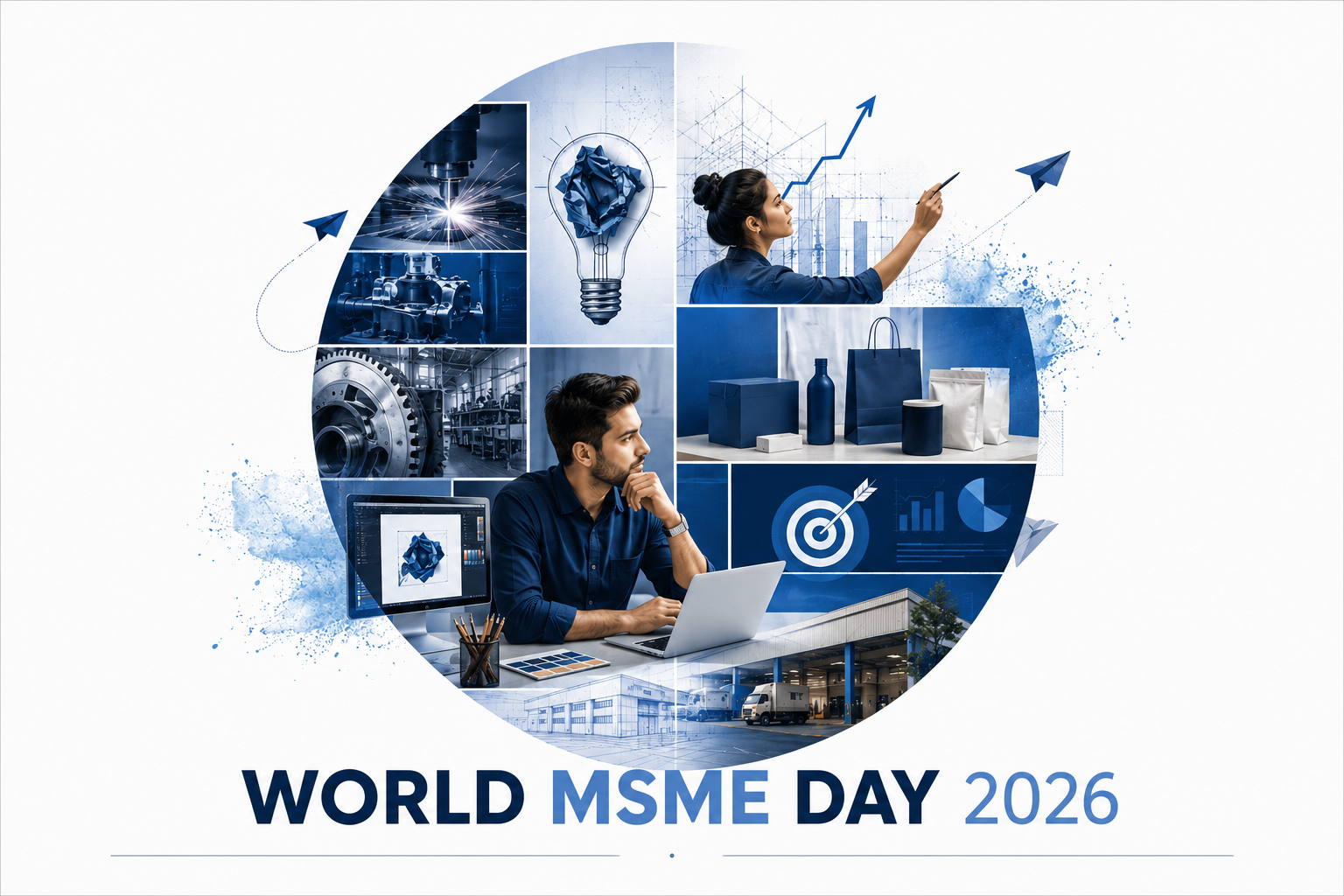
This perspective aligns naturally with the United Nations theme for MSME Day 2026, “Human-Centred Entrepreneurship in an AI-Driven Future: Economic Empowerment for the Next Generation of MSMEs.” Artificial intelligence can analyse user behaviour, personalise campaigns, automate routine processes, develop content, identify commercial opportunities, and simplify brand development. Entrepreneurs, however, remain responsible for strategic direction, organisational culture, values, innovation, partnerships, and long-term leadership. Algorithms may process information at remarkable speed, although strategic vision still belongs to people.
Ai has introduced another significant advantage. It has dramatically lowered the entry barrier for recognition. Creating professional advertising campaigns, films, catalogues, websites, or relations programmes once demanded substantial financial investment. Contemporary platforms provide smaller enterprises with access to modern creative tools, audience analytics, automation, and measurable campaign insights previously available mainly to larger organisations. The advantage, therefore, increasingly depends upon original thinking and the effective use of modern technology, reducing dependence on financial scale alone.
The future will favour those investing equally in engineering excellence and long-term credibility. Online presence, stakeholder relationships, sustainability, employer reputation, thought leadership, and community building are rapidly emerging as essential differentiators. Those welcoming this change early will enjoy a considerable strategic advantage, while product quality alone may gradually prove insufficient in increasingly crowded categories.
Progress depends upon exceptional offerings and genuine human understanding. Lasting influence belongs to those creating names people remember for the right reasons.
The next generation of MSMEs will be recognised as much for recall as the quality of what they create. Superior capabilities may secure the initial order, although enduring preference develops through reputation, lasting relationships, organisational character, and trust. Building a foundation for sustained growth is a significant milestone. Extending that success well beyond factory walls may ultimately distinguish tomorrow’s industry leaders.
For media enquiries: www.synthesisindia.in | narendra@synthesisindia.in


