


Every phase of industrial growth brings new priorities. Capacity expansion is increasingly
accompanied by investments in automation, digital factory systems, intelligent production, and engineering expertise capable of supporting complex operations. As India accelerates investments across automotive, aerospace, electronics, semiconductor fabrication, defence and electric mobility, Taiwan has steadily expanded its position as an important industrial partner. Bilateral trade between the two economies has reached approximately US$12.5 billion, while India has become one of Taiwan’s leading destinations for manufacturing equipment and component exports. Manufacturing equipment exports increased from approximately US$93.5 million in 2022 to over US$144 million in 2025, accompanied by sustained growth in component shipments.
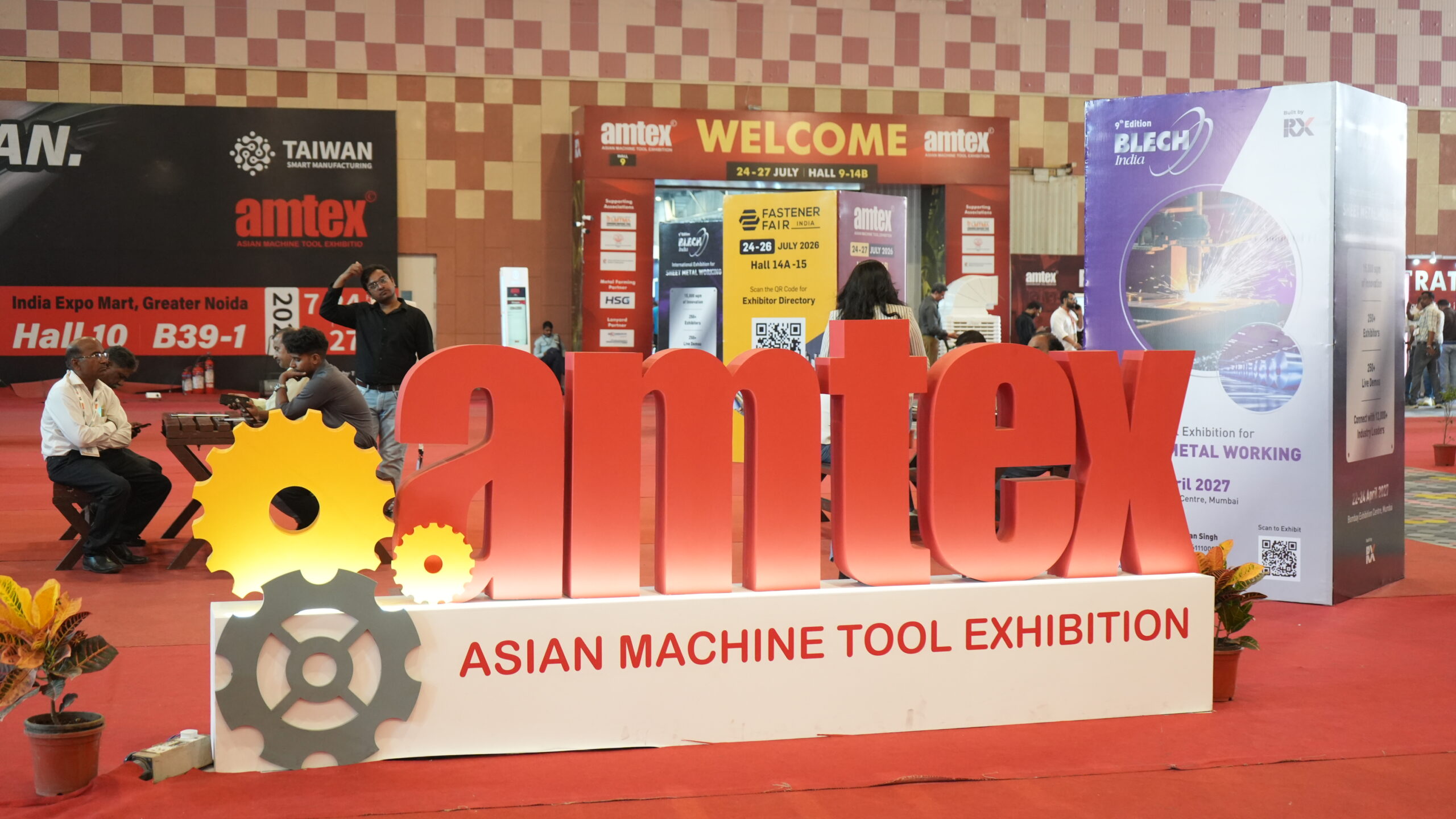
Held between 24 and 27 July 2026 at the India Expo Mart, Greater Noida, AMTEX 2026 placed this growing relationship into practical focus. Bringing together over 500 exhibitors representing metal cutting, automation, robotics and advanced manufacturing, and co-located with Fastener Fair India 2026, the exhibition attracted specialists, suppliers, research organisations, associations and professionals seeking practical approaches to improve processing quality and factory digitalisation.
Among its prominent attractions was the Taiwan Smart Manufacturing Pavilion, organised by the International Trade Administration, Ministry of Economic Affairs, Taiwan, and implemented by the Precision Machinery Research and Development Center (PMC). Presented under the theme “Fine Tolerance from Taiwan, Progress for India,” the pavilion featured over twenty Taiwanese companies representing CNC centres, cutting tools, tube processing equipment, electrical discharge machining, factory digitalisation platforms, automation systems and software serving a wide range of sectors.
Throughout the four-day event, equipment, software, automation, application support and customer support were presented as interconnected elements within modern systems. Forum sessions, interactions, company presentations and business meetings consistently focused on intelligent automation, artificial intelligence, digital factory systems, sustainability and collaboration, illustrating how planning increasingly depends upon coordinated systems working together.
These themes became central to the sessions organised at the pavilion. Although the participating companies represented different areas of expertise, the sessions repeatedly returned to workforce availability, digital factory systems, artificial intelligence, energy efficiency, application support and long-term partnerships. Together, these subjects presented a broader perspective on the requirements currently influencing investments across multiple businesses.
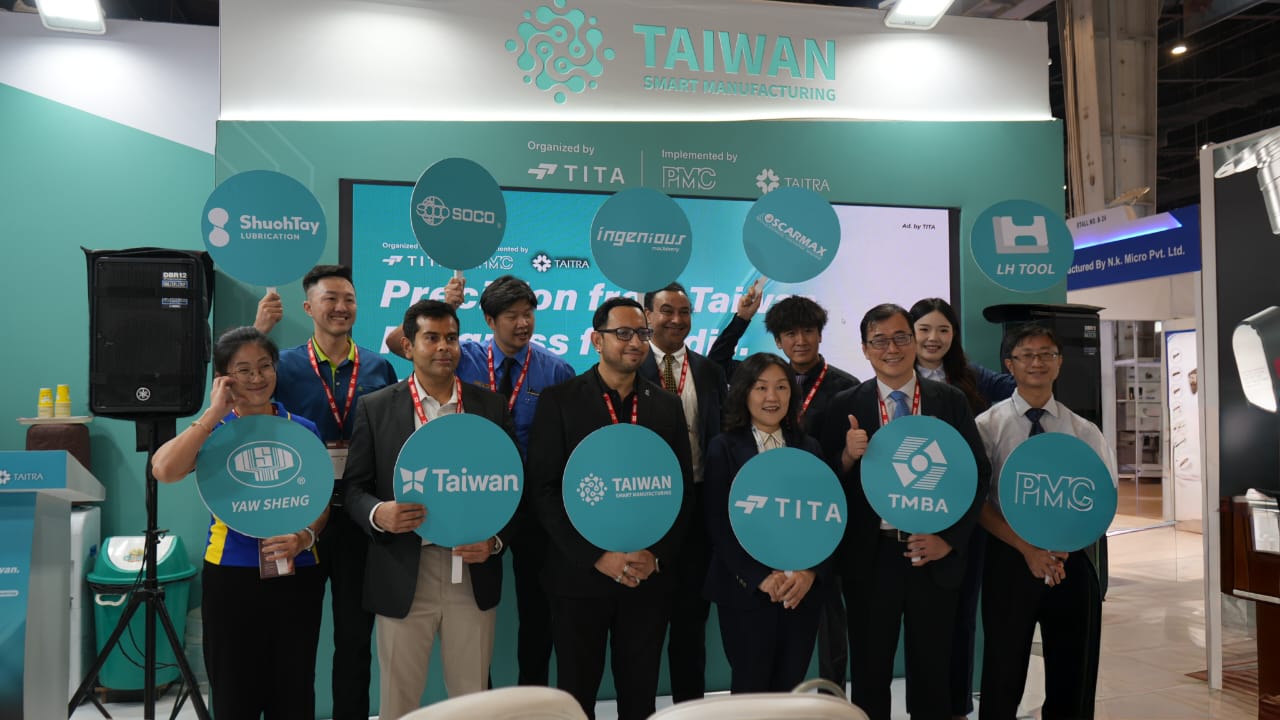
The programme opened with the “Taiwan-India Synergy for Smart Manufacturing: High-End Manufacturing Trend Forum,” bringing together Ms. Chen Yu Chi, Executive Director, Economic Division, Taipei Economic and Cultural Center in India; Mr. D. Shanmugasundaram, Vice President, TAGMA India; Mr. Evan Chou, Regional Sales Manager, SOCO Machinery; representatives of Ingenious Machinery, Cheng Hsin Precision Technology and OSCAR E.D.M. Company Ltd. The session was moderated by Mr. Vaibhav Shah, Chief of Global Business and Chief Marketing Officer, Cosmos Group, who also led the subsequent panel discussion titled “Smart Precision Manufacturing: Taiwan Solutions for India’s Next Industrial Growth.”
Addressing the gathering, Ms. Chen Yu Chi spoke about the expanding relationship between India and Taiwan. She highlighted initiatives such as Make in India, alongside increasing investments across automotive, aerospace, electronics, semiconductor fabrication and electric mobility, explaining how these areas are generating demand for advanced equipment, automation systems, control systems and integrated manufacturing. She also observed that Taiwan’s equipment manufacturers, component suppliers, software developers and automation specialists work together to support complete facilities as well as the modernisation of existing plants.
Building on this broader perspective, the panel discussion examined the practical realities currently influencing both countries. Drawing upon Cosmos Group’s four decades of association with Taiwanese equipment manufacturers, Mr. Vaibhav Shah described Taiwan as a long-standing technology partner and pointed towards India’s expanding position within global supply chains. He observed that companies are increasingly expected to expand within compressed timelines while simultaneously investing in infrastructure, equipment and skilled manpower. He also highlighted India’s dependence on imported core equipment components, including ball screws, linear guides, CNC control systems, motors and drive systems, suggesting that greater domestic expertise in these critical areas will become increasingly important as expansion gathers pace.
Offering the Taiwanese perspective, Mr. Evan Chou explained how similar workforce challenges have encouraged companies such as SOCO Machinery to develop intelligent equipment that simplifies equipment use while maintaining consistent product quality. According to him, smart automation enables process knowledge to remain integrated within the equipment itself, reducing dependence on highly experienced personnel and supporting greater consistency across facilities.
The panel then turned to digital factory systems and artificial intelligence through Mr. Antonio Argote Bertely, Brand Marketing Specialist, Yi Da Precision Machinery Co., Ltd. (Ingenious Machinery). He described digitalisation as one of the defining factors behind Taiwan’s industrial development over the past two decades, explaining how sensors, artificial intelligence and intelligent monitoring systems are increasingly integrated into equipment to analyse manufacturing processes, improve efficiency and reduce unplanned downtime. He also introduced EcoPulse, Ingenious Machinery’s intelligent energy management platform, which monitors electricity consumption at the component level while using artificial intelligence to identify opportunities for improved energy utilisation and planning.
The importance of collaboration was further spotlighted by Ms. Vicky Chen, International Sales Manager, Li Hsing Precision Tool Co., Ltd., who explained that customers increasingly expect partners who support process optimisation, tooling selection and process improvement alongside supply. Sharing an application involving a semiconductor component company, she demonstrated how collaborative process optimisation significantly reduced processing time while extending tool life, illustrating the practical value of application consultation across the manufacturing process.
Concluding the panel, Mr. Chin-Tsan Ho, Executive Manager, OSCAR E.D.M. Company Ltd., spoke about the company’s two decades of working with Indian customers and discussed the opportunities created through closer partnership between Indian companies and Taiwan’s expertise in advanced manufacturing equipment and EDM systems. He also outlined the company’s ongoing work in integrating artificial intelligence with flexible manufacturing systems, enabling equipment to identify potential issues, generate diagnostic information and contribute to improved factory management through connected digital platforms.
The presentations that followed expanded upon many of the priorities raised during the panel. Although each speaker represented a different company and area of expertise, the recurring focus on intelligent automation, application support, digital factory systems, sustainability and long-term collaboration provided a consistent framework that remained visible across the Taiwan Smart Manufacturing Pavilion.
Through the “Precision from Taiwan, Progress for India: High Precision, Smart Cost, Flexible Manufacturing” elevator pitch programme, these broader priorities were presented through practical applications. Indian companies were introduced to offerings serving automotive, electric vehicles, aerospace, defence, electronics, semiconductor fabrication and equipment. Although every participant specialised in different application areas, the presentations consistently combined advanced equipment with digital factory systems, automation, process optimisation and application support.
Providing the wider context, Mr. Yu-An Liu, Senior Engineer and Vice President, Precision Machinery Research and Development Center (PMC), Taiwan, outlined the organisation’s role in supporting Taiwan’s manufacturing equipment sector through research, development and collaboration. Established in 1993 by the Taiwan government together with the Taiwan Association of Machinery Industry, PMC serves as a bridge between research institutions and companies, supporting commercial development, testing, certification and international competitiveness.
Alongside smart automation and artificial intelligence, Mr. Liu presented developments such as thermal compensation systems that improve dimensional accuracy on existing CNC equipment, equipment connectivity platforms integrating equipment from multiple companies into a unified monitoring environment, topology optimisation for lightweight structural design, and intelligent diagnostic systems that identify potential equipment issues before they interrupt manufacturing processes.
Several participating companies translated these developments into commercially available applications. 7 Leaders showcased high-performance carbide cutting tools developed for demanding applications, with interchangeable tooling systems designed to improve efficiency while reducing material consumption and costs. The company’s reusable tool holders, remanufactured cutter heads and recycled carbide further illustrated how tooling development increasingly considers both efficiency and environmental responsibility.
Representing Yi Da Precision Machinery Co., Ltd. (Ingenious Machinery), company representatives described an integrated approach built around customisation, automation and intelligent factory management. Its EcoPulse platform exhibited how artificial intelligence can monitor energy consumption at both equipment and component levels, enabling users to identify unnecessary energy usage, monitor equipment conditions and support planning through real-time data analysis. Company representatives also revisited one of the recurring concerns raised during the forum sessions, explaining how intelligent automation can simplify equipment use while maintaining consistent quality.
Chen Li Machinery, with nearly sixty years of experience in high-speed presses, introduced technologies serving electronics, semiconductor fabrication and electric mobility applications. Alongside its C-frame and H-frame high-speed presses, the company focused on application support, long-term customer support and in-house development of critical equipment components, enabling customers to maintain stable workflows across demanding environments.
Shuotay Enterprise introduced its approach to cutting fluid lifecycle management. Instead of supplying cutting oils alone, the company outlined a comprehensive support model incorporating formulation, application consultancy, fluid management and waste reduction. Supported by three decades of domain experience, the session explained how optimised cutting fluids contribute to extended tool life, stable process conditions, environmental compliance and lower OpEx across aerospace, defence, automotive and general precision applications.
Although SOCO Machinery was unable to deliver its scheduled session during the Elevator Pitch programme, the company remained an active participant across the pavilion through its displays and interactions with visitors. Its tube cutting and tube bending systems attracted considerable interest from companies serving automotive, aerospace and energy applications requiring advanced tube processing.
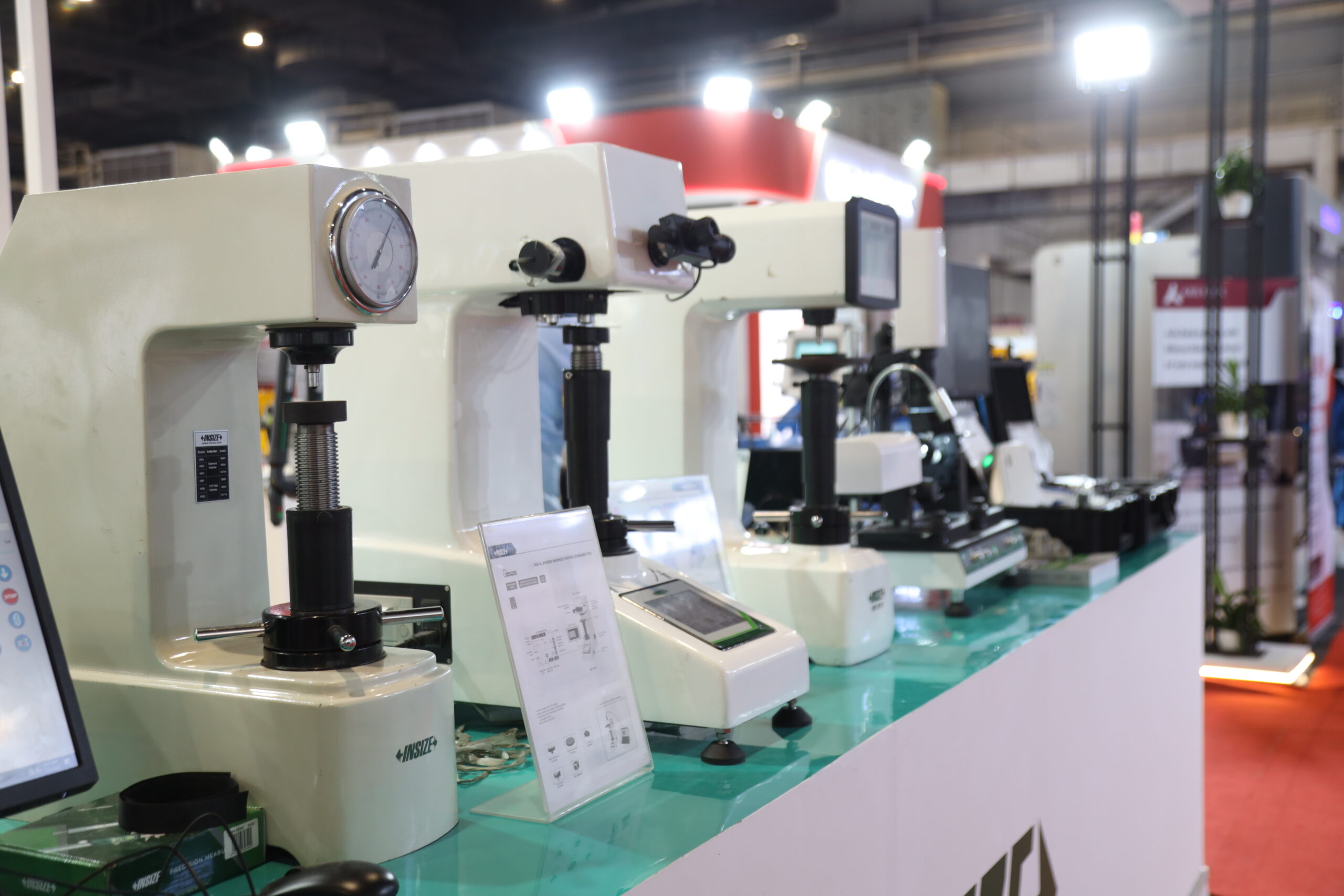
The pavilion also included Yaw Sheng Machinery, Cheng Hsin Precision Technology, Li Hsing Precision Tool Co., Ltd. and OSCAR E.D.M. Company Ltd., further expanding the range of offerings available to Indian visitors. Collectively, these companies covered CNC centres, tooling, EDM systems, automation and support services for advanced facilities.
Beyond the formal presentations, the “Zero-Risk Trials, Real Partnerships: Exclusive Sample & Trial Order Matchmaking” programme provided companies with an opportunity to discuss application-specific requirements directly with Taiwanese teams. Application consultations, sample evaluations and business meetings enabled prospective users to assess solutions according to their own requirements while laying the groundwork for future business partnerships.
Over the four days, several common priorities connected the forum sessions, company presentations and business interactions at the expo. Whether the focus was advanced equipment, cutting tools, EDM systems, tube processing, factory automation, digital factory systems or application support, the participating organisations presented integrated work environments where multiple systems function together to support efficiency, quality and long-term growth. Artificial intelligence, factory connectivity, sustainability, application consultation and process optimisation appeared repeatedly across forum sessions, company presentations and business interactions, illustrating how priorities are evolving alongside advances in equipment and integrated systems.
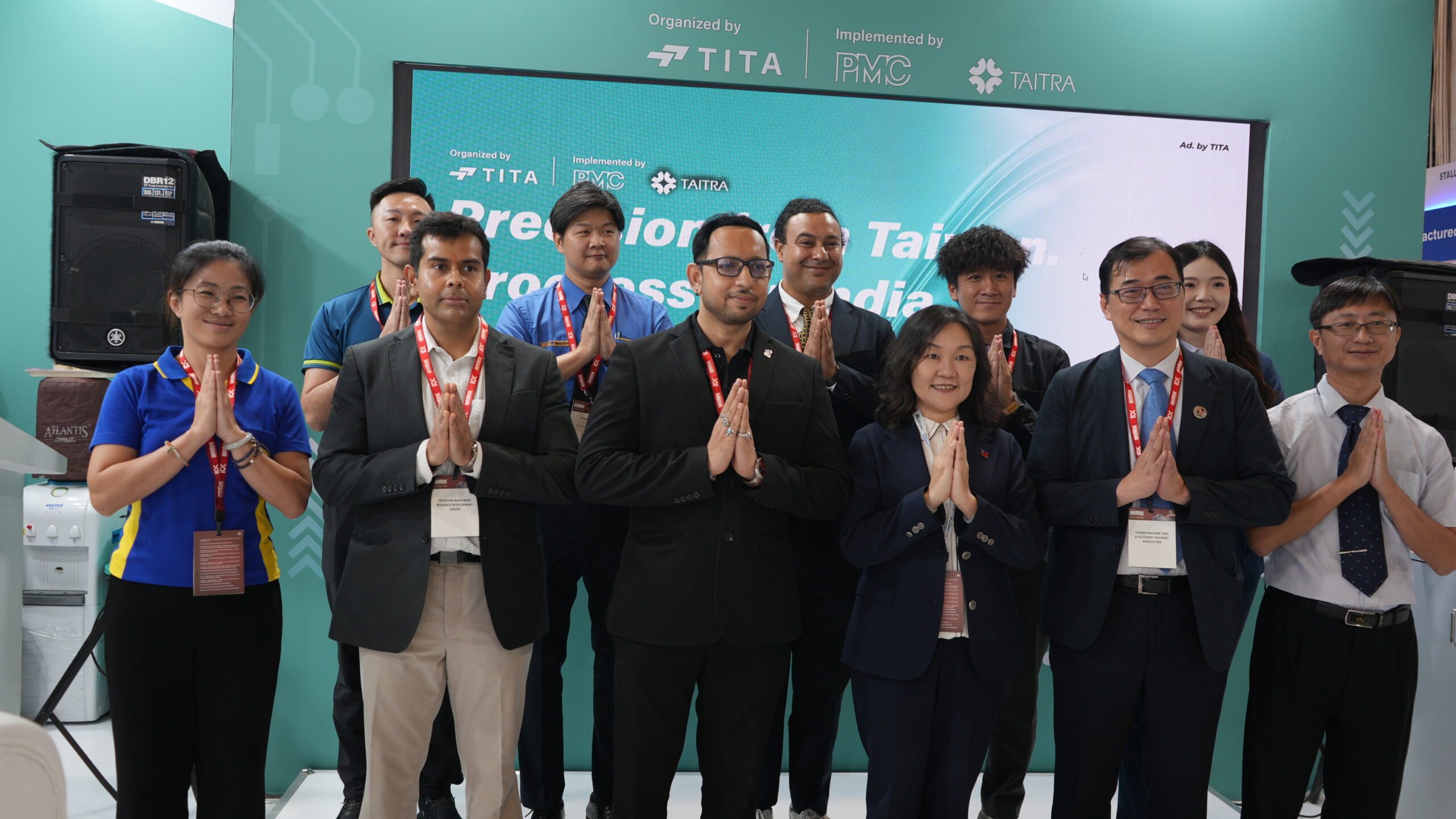
The Taiwan Smart Manufacturing Pavilion illustrated how India’s industrial priorities aligned closely with Taiwan’s engineering expertise. Supported by initiatives such as Make in India and growing investments across automotive, aerospace, electronics, semiconductor fabrication, defence and electric mobility, India is creating demand for advanced engineering solutions. Taiwan, with its established network of equipment manufacturers, component suppliers, software developers, automation specialists and research institutions, presented expertise that aligns closely with these emerging requirements. The participation of organisations such as the International Trade Administration, the Ministry of Economic Affairs, Taiwan, the Precision Machinery Research and Development Center (PMC) and leading Taiwanese companies also demonstrated how government, research institutions and businesses can work together to accelerate industrial development.
As Official Media Partners of the Taiwan Smart Manufacturing Pavilion, Machine Tools World and Engineering Review followed the developments during AMTEX 2026. The most significant takeaway was the growing alignment between India’s investment priorities and Taiwan’s manufacturing expertise. Across every session and company presentation, the focus remained on combining equipment, digital factory systems, artificial intelligence, application support and long-term collaboration. That alignment is likely to become increasingly relevant as India’s manufacturing ecosystem expands into higher-value and more specialised applications.
Synthesis Media
For media enquiries, connect at: narendra@synthesisindia.in
Visit: www.synthesisindia.in
