



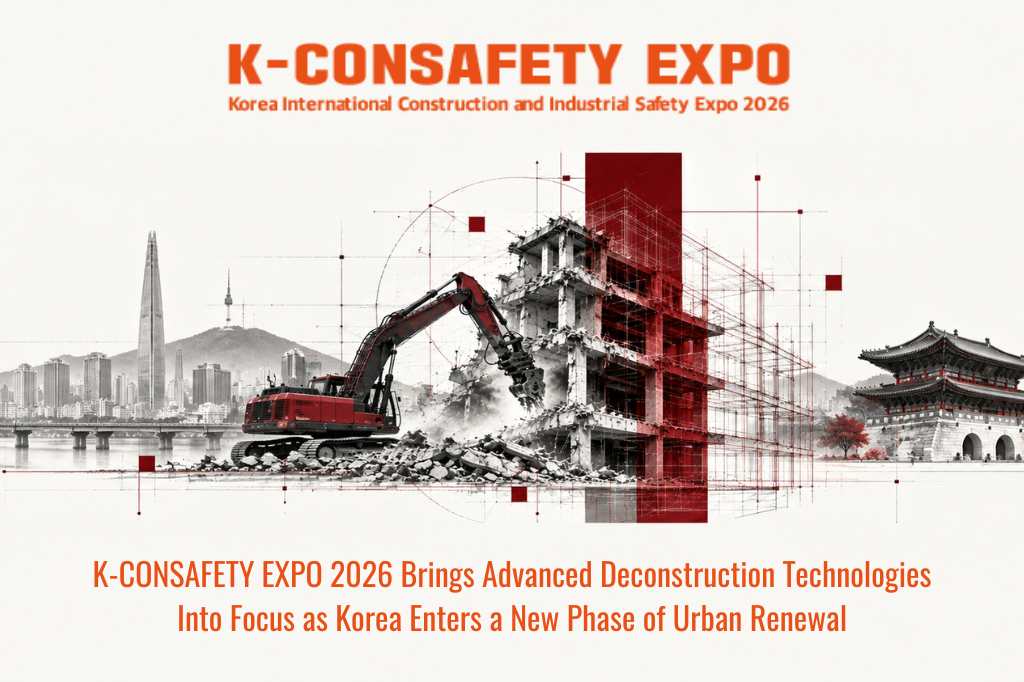
Dedicated technology zone and conference highlighting demolition safety, AI based risk assessment, specialised technical solutions and the future of infrastructure deconstruction.
A building’s lifecycle extends well beyond its construction and operational use. When ageing structures, public infrastructure and industrial facilities require dismantling, the process demands careful structural assessment, technical planning, specialised equipment and comprehensive safety management. The increasing complexity of urban environments has made deconstruction an important technical discipline involving structural stability, worker protection, environmental controls and responsible material management.
Traditional demolition practices, often dependent on site experience and manual intervention, are now being supplemented by controlled dismantling methods, digital monitoring, artificial intelligence, drones, advanced machinery and environmental technologies. These developments are changing how the industry approaches the removal of existing structures, particularly in locations where surrounding buildings, public movement and underground infrastructure create additional risks.
The significance of advanced deconstruction extends across several areas. Structural assessment helps identify potential weaknesses before work begins. Temporary support systems assist in managing stability during dismantling. Dust suppression technologies help address airborne particles, while remote monitoring systems can provide access to hazardous or difficult locations. Equipment innovation, professional training and appropriate safety policies are equally important for ensuring that complex projects are planned and executed responsibly.
These requirements are gaining greater attention in Korea, where ageing buildings, redevelopment of first generation new towns and large scale urban renewal projects are creating demand for more systematic approaches to deconstruction. Industrial facilities also require specialised planning when operations end, particularly where complex machinery, hazardous environments and strict safety requirements are involved.
Industry expectations indicate that Korea’s domestic deconstruction market could reach approximately KRW 6 trillion by 2030. At the same time, demolition accidents, including the collapse during work on Seoul’s Seosomun Overpass, have raised important questions about structural assessment, dismantling sequences, temporary support systems, site supervision and emergency risk management.
These developments point towards a wider transformation of the traditional demolition sector. Deconstruction increasingly requires expertise across structural engineering, safety policy, equipment technology, artificial intelligence and environmental management. The issue extends beyond how a structure is dismantled. It concerns how the entire process can be assessed, planned, monitored and executed with greater protection for workers, surrounding communities and the environment.
Against this industry context, the 2026 Korea International Construction & Industrial Safety Expo, K CONSAFETY EXPO 2026, will introduce the Advanced Deconstruction Technology Zone at KINTEX Exhibition Center 1 in Korea, scheduled for October 14 to 16, 2026. The dedicated platform will present technologies and solutions for building dismantling, industrial plant deconstruction, temporary safety systems, dust suppression, unmanned operations, AI based safety management and construction waste sorting.
The exhibition will be accompanied by the K Deconstruction Conference, creating a forum for discussions on safety policy, advanced dismantling methods, professional training, accident prevention and the future requirements of Korea’s deconstruction industry.

Advanced Technologies for Complex Deconstruction Requirements
The Advanced Deconstruction Technology Zone will showcase solutions covering several stages of building and industrial facility dismantling. Its focus will include controlled demolition, temporary structures, environmental management, remote monitoring, industrial plant deconstruction and construction waste handling.
Inyoung Construction will present eco friendly foam based demolition technology and dry cutting deconstruction methods for disaster response applications. Korea Casco will showcase temporary safety systems, including system scaffolding, soundproof panels, wall clamps and jack supports designed for deconstruction projects.
Korea Kacoh will feature blasting demolition technologies for reinforced concrete and steel structures, while Ilwoong Engineering will present its DFD, or Demolition Factory Jack Down System. The system is designed to reduce noise and dust while lowering the risks associated with structural collapse and overturning.
Sungdo Construction Industry will showcase advanced technologies for complex industrial plant deconstruction. Daeyoung Construction Industry Development and Janghyung Industrial Development will present high pressure water spraying equipment and construction waste sorting solutions supporting dust suppression and site management.
Okdang Industry will introduce AI based safety management systems for deconstruction sites. Puriflight will feature drone based smart construction safety systems designed to access high altitude and hazardous areas remotely, including water spraying near airborne dust generation points.
The participating technologies address different requirements within a deconstruction project. Structural dismantling systems focus on controlled removal, while temporary safety solutions address stability during site operations. Water spraying equipment and waste sorting systems support environmental management. Drones and AI based applications offer additional options for monitoring, risk assessment and access to difficult areas.
K Deconstruction Conference 2026: Policy, Safety and Technical Development
The K Deconstruction Conference 2026 will take place on October 14, 2026, at Conference Room 304, KINTEX Exhibition Center 1, under the theme “Shaping the Future of K Deconstruction.” Registration and seating will begin at 12:30 p.m., followed by the opening ceremony at 12:45 p.m., with a representative of the Ministry of Land, Infrastructure and Transport scheduled to participate. The conference will focus on policy, technology and safety challenges affecting Korea’s deconstruction sector.
The technical sessions will begin at 1:00 p.m. with “Korea’s Deconstruction Industry: Assessment and Advancement Strategy,” presented by Jae Yeol Jeon, Chair of the Deconstruction Industry Advancement Forum. The next session, scheduled for 1:30 p.m., will cover “Case Studies of Advanced Deconstruction Methods by Structural Type,” featuring Professor Kyung Koo Lee of Dankook University.
At 2:00 p.m., Tae Hwan Kim of the Seoul Regional Building Safety Center will present “Strengthening Safety Management at Seoul Deconstruction Sites.” The 2:30 p.m. session will address “Recent Deconstruction Accidents: Analysis and Prevention,” including the Gwangju Hak dong and Seosomun Overpass incidents. The session will feature Myung Ki Choi, Industrial Field Professor.
The 3:00 p.m. session will focus on “R&D Achievements and Future Directions for Advanced Deconstruction,” presented by Tae Hyub Song, Director of the Advanced Deconstruction R&D Group. At 3:30 p.m., Professor Chang Beom Ahn of Seoul National University will address “AI Based Risk Assessment System for Deconstruction Work.”
The 4:00 p.m. session will focus on “Training Korean Deconstruction Specialists: Global Best Practices,” with Prof. Hee Sung Cha of Ajou University. The final technical session, scheduled for 4:30 p.m., will cover “Nuclear Facility and Industrial Plant Decommissioning: Status and Outlook,” presented by Kwan Sung Jeong, Principal Researcher at KAERI. The conference will conclude with a closing session scheduled after 5:00 p.m.
The sessions will cover the current status and advancement strategies of the domestic industry, advanced deconstruction methods, structural case studies, site safety management, accident prevention, research and development, AI-based risk assessment, training, and nuclear and industrial facility decommissioning. They will provide opportunities to discuss regulatory requirements, technical challenges and capabilities required for complex dismantling projects.
The conference will address demolition accidents through a broader framework involving policy, technical planning, artificial intelligence and workforce development. This approach will focus on the conditions that can lead to accidents, the systems required to identify risks and the capabilities needed to manage complex deconstruction work.
The event is expected to attract representatives of central and local governments, public sector project owners, construction companies and specialised deconstruction contractors. Their participation will support discussions around safety policies, technical developments, industry requirements and future priorities for Korea’s deconstruction sector.
The conference is jointly organised by the Organizing Committee for the Advanced Deconstruction Technology Zone and Conference, the Structure Demolition & Scaffolding Works Council of KOSCA, the Forum for Advancement of the Deconstruction Industry, the Research Group for Safe Building Deconstruction Planning and Construction Technology Development, the Korea Building Deconstruction Technology Research Institute, and KINTEX.
Safe Deconstruction Requires Professional Responsibility
The need for improved deconstruction practices has gained significance as infrastructure renewal expands across Korea. Safe dismantling requires coordination between project owners, structural specialists, contractors, equipment providers, public authorities and trained site personnel. Decisions taken during assessment and planning can affect structural stability, worker safety, environmental exposure and surrounding communities.
Chun Jae Youl, Chairman of the Organizing Committee for the Advanced Deconstruction Technology Zone and Conference and representative of the Forum for Advancement of the Deconstruction Industry, said:
“Korea’s construction industry has entered an era in which we must consider both safe construction and the safe, precise deconstruction of structures through professional expertise, advanced technologies and suitable equipment.”
He added that the Special Zone and Conference aim to support the transition of the conventional demolition industry into an advanced deconstruction sector combining safety, specialised technical expertise, AI and environmentally friendly technologies. The organisers also intend to develop the event into a leading Korean deconstruction industry platform connecting government, industry and academia.
Deconstruction and Korea’s Urban Future
K CONSAFETY EXPO 2026 arrives at a significant stage in Korea’s infrastructure development. Ageing buildings, urban renewal projects and industrial facility decommissioning will require methods suited to different structural conditions, surrounding environments and safety requirements.
The future of the sector will depend on effective regulations, suitable equipment and technologies that support informed decisions at each stage of a project. Greater attention to dust control, temporary structures, remote monitoring and material sorting can contribute to safer and more responsible dismantling practices.
The Advanced Deconstruction Technology Zone and K Deconstruction Conference 2026 will bring these requirements into a dedicated industry forum. By connecting technology providers, public authorities, contractors, researchers and other stakeholders, the programme will support discussion around the development of Korea’s deconstruction sector.
As urban renewal gathers pace, deconstruction will become an increasingly important part of infrastructure planning. The quality of a renewal project must be assessed through the entire lifecycle of a structure, including its eventual removal. This requires safety standards that extend beyond construction, technical systems capable of managing complex conditions and practices that protect people and the surrounding environment.
The future of urban renewal will depend on how responsibly existing structures are dismantled. For Korea, advanced deconstruction offers an opportunity to connect infrastructure renewal with stronger safety practices, technical innovation and environmental responsibility.
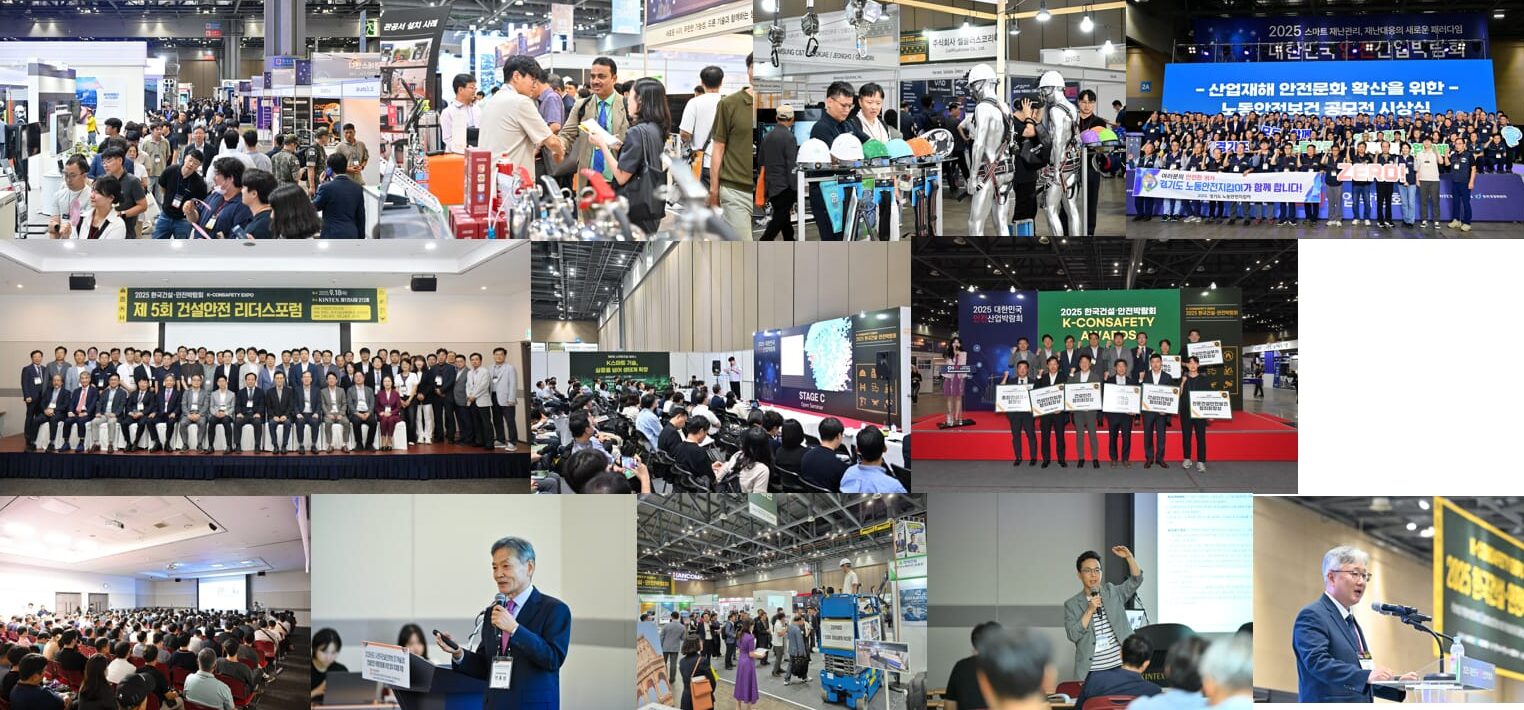
About K CONSAFETY EXPO 2026
K CONSAFETY EXPO 2026 is a professional construction safety exhibition supported by major Korean government ministries, public institutions and industry organisations, including the Ministry of Land, Infrastructure and Transport, Ministry of Employment and Labor, Gyeonggi Province, Construction Association of Korea and Korea Specialty Contractors Association.
The exhibition’s special zones will include the Advanced Deconstruction Technology Zone, Underground Safety Zone, Heavy Equipment and Attachment Zone, Construction AI Zone and Advanced Safety Industry Zone. Concurrent events will include the Urban Safety Technology Expo and World CityTech Korea.
The Advanced Deconstruction Technology Zone will feature Korea Kacoh, Ilwoong Engineering, Jang Hyung, Sungdo Construction, Korea Casco, Daeyoung Development, Keunsol Miramaru, Puriflight, Inyoung Construction and Okdang Industry. Their showcased solutions will cover blasting demolition, DFD methods, high-pressure water spraying, construction waste sorting, industrial plant deconstruction, temporary safety systems, drone-based safety applications, eco-friendly foam demolition and AI-based site monitoring. Together, these exhibitors will present technical solutions addressing structural dismantling, temporary support, dust suppression, environmental management, and worker safety.
Media and Exhibition Inquiries
K CONSAFETY EXPO 2026 Secretariat / KINTEX
Tel: +82-31-995-8772
Email: kconsafetyexpo@kintex.com
Website: www.k-consafetyexpo.com
