



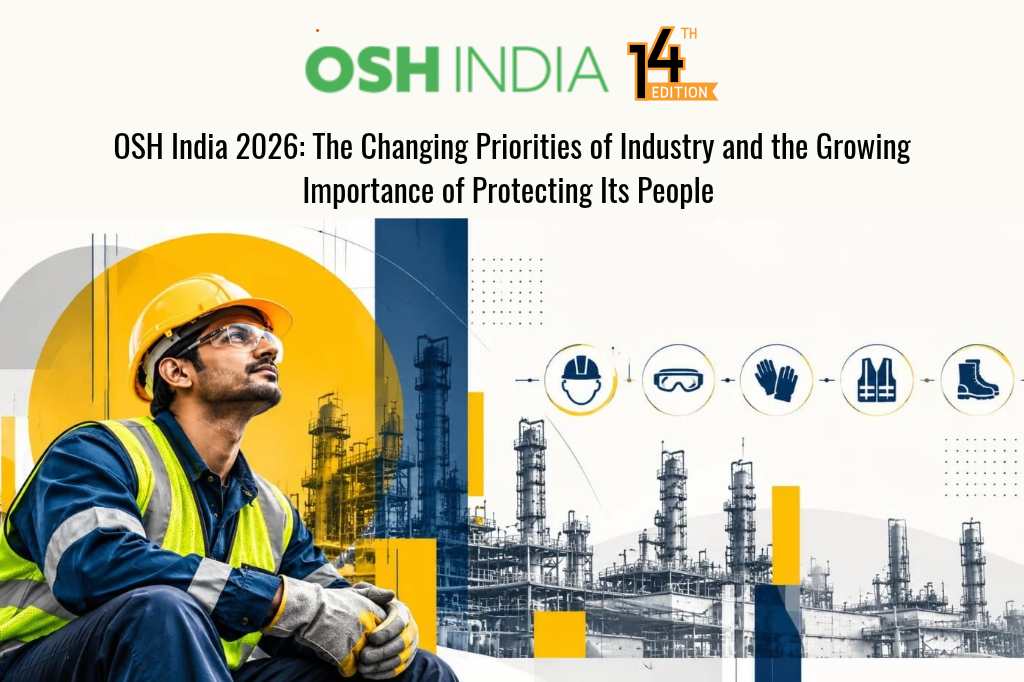
Not long ago, a manufacturing worker’s safety was mostly dependent on his own common sense. Machines became faster, factories expanded, and productivity increased, while protective equipment, formal training, and workplace health lagged far behind. Injury was dismissed as the cost of industrial labour, and occupational sickness could remain hidden for years. Eventually, the human cost of growth became too high to ignore.
What turned the tide was nothing like a single event but decades of pressure, legislation, research, and collaborative action. Governments enacted workplace rules. Labor organizations advocated for safer working conditions. Engineers began incorporating protection into machinery and plant design. Employers realized that a warning board and a page of instructions were never enough. Occupational health and safety gradually evolved into an independent profession, backed by institutions, standards, training, and specialized knowledge.
The numbers demonstrate why this is important. About 3 million workers lose their lives each year as a result of workplace accidents and diseases, with an additional 395 million suffering non fatal injuries. Behind such figures lies an uncomfortable truth: workplace danger rarely manifests itself as a single dramatic occurrence. Chemicals, dust, excessive heat, noise, hazardous machinery, repeated strain, and unsafe circumstances can all have a long term impact on a person’s health.
Technology has begun to write a new story. Artificial intelligence can help detect hazards and monitor operations. Wearables can track exposure and worker health. Virtual reality may simulate dangerous scenarios for training purposes without putting anyone in danger. Digital inspection platforms can document repeated failures and assist safety teams in identifying patterns, while smart PPE, advanced fire detection, and connected emergency systems are becoming more widely used throughout industries.
However, devices alone do not constitute a safe plant. Even the most creative solution is dependent on qualified personnel, effective implementation, and a culture in which hazards are recognized and addressed. The most effective safety practices often combine engineering controls, protective equipment, education, surveillance, and worker feedback. Although tech can provide information and accelerate response times, the final decision on the work floor remains in the hands of humans.
These topics are being discussed at OSH India Expo 2026, currently taking place from October 7 to 9 at Hall 3, Bombay Exhibition Centre, NESCO, Goregaon, Mumbai. The 14th edition features over 9,000 visitors, 300 exhibiting brands, 150 delegates and 50 speakers across more than 12,000 square metres of exhibition space, with participation spanning 13 plus countries. The Chief Guest is Adv. Akash Pandurang Fundkar, Minister of Labour, Government of Maharashtra, while Smt.Vrunda Manohar Desai, IRS, Textile Commissioner, Government of India, attended as Guest of Honour alongside industry leaders and safety representatives.
Addressing the gathering on World Cotton Day 2026 (7th October), Smt. Desai highlighted occupational health and safety across the textile value chain, noting that textiles are India’s second largest employer and nearly 70% of its workforce comprises women. She stressed the importance of inclusive workplaces, technical textiles, responsible manufacturing and worker welfare, alongside compliance with statistical reporting requirements through the Textile Statistical Returns System portal. The exhibition spans personal protective equipment, fire and gas detection, passive fire protection, safety signage, ergonomic workstations, training, consultancy, safety software, security services and medical and travel security, with AI and digital technologies presenting further possibilities for workplace protection.
As a Media Partner for OSH India Expo 2026, Industrial Safety Review Magazine sees a perfect connection. Over the years, the publication has covered occupational safety, industrial protection, fire safety, emergency preparedness, personal protective equipment (PPE), workplace health, and developing safety technologies. Its pages connect safety professionals, manufacturers, consultants, and industrial organizations to the changes that matter where work actually takes place.
A safer workplace is perceived in ways that are seldom documented in safety reports. It is felt when a worker walks onto the shop floor knowing that the machine next to him has been guarded, the equipment has been checked, and the proper protection is in place. It is evident in the confidence with which he goes about his business, knowing that his health has been given equal care as the task at hand. That sense of security extends well beyond the production floor. It provides reassurance to families and empowers workers to earn, participate, and grow their lives with dignity.
People have always played an important role in industrial advancement. When industries prioritize human safety in their growth strategies, the benefits reach the individual workplace. Workers gain trust, families gain security, firms strengthen their workforces, and communities experience improved social stability. Industries that recognize this relationship can go forward with a greater sense of responsibility, creating both prosperity and the welfare of others. In this sense, occupational safety is also an indicator of how carefully an industry and society as a whole choose to grow.
