



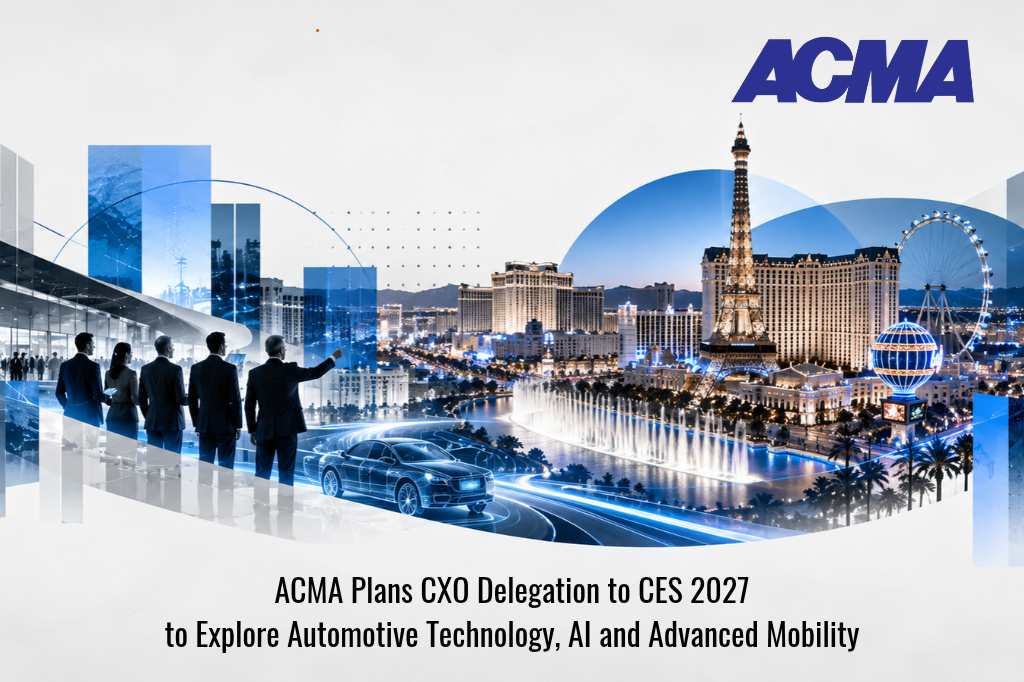
Proposed delegation led by ACMA President Sriram Viji will connect Indian automotive executives with global technology leaders, OEMs and emerging mobility companies in Las Vegas.
MUMBAI, NDIA, 19 OCTOBER 2026: Automotive technology is expanding beyond conventional vehicle systems. Artificial intelligence, autonomous driving, software defined vehicles, connected technologies and advanced computing are changing how vehicles are developed, integrated and supported throughout their service life. These developments are creating scope for automotive component manufacturers to assess emerging technologies, establish technical partnerships and identify business prospects across an increasingly interconnected mobility ecosystem.
The Automotive Component Manufacturers Association of India (ACMA) is planning an exclusive CXO Delegation to CES 2027, scheduled for January 6 to 9, 2027, in Las Vegas, Nevada, USA. The proposed initiative will give senior automotive executives access to developments in vehicle technology, advanced mobility solutions, artificial intelligence and robotics, while meeting technology companies, startups and international business leaders.
The delegation is proposed to be led by Mr. Sriram Viji, President, ACMA and Managing Director, Brakes India Private Ltd. The initiative aims to connect Indian automotive leadership with emerging technologies, changing business requirements and potential avenues for international collaboration.
CES has developed into a significant international technology event, with automotive and mobility technologies forming an important part of its programme. Its wider technology categories encompass artificial intelligence, robotics, connected devices, autonomous systems and advanced computing, with relevance across the vehicle value chain.
The growing convergence between automotive engineering and digital technology presents several considerations for component manufacturers. Advanced driver assistance systems (ADAS), electric vehicles, software defined vehicles and intelligent production systems are changing technical requirements across vehicle design, electronic integration, testing and supplier collaboration.
Artificial intelligence agents and robotics are also attracting attention as companies evaluate their use in engineering, manufacturing, logistics and service delivery. For automotive businesses, these developments raise questions around product architecture, technology adoption, investment priorities and collaboration with specialist technology providers. CES 2027 enables participating executives to assess these developments directly, compare approaches across technology categories and identify areas relevant to their organisations.
The proposed delegation will focus on meetings with global OEMs, technology companies, innovators, startups and other stakeholders across the mobility ecosystem. Its objectives include assessing technological advances in ADAS, electric mobility, software defined vehicles, intelligent manufacturing, robotics and artificial intelligence, while developing professional connections with international technology leaders and emerging businesses.
Strategic discussions will provide opportunities to consider commercial cooperation, technical partnerships, joint development and sourcing relationships. Participants can also gain perspectives on digital transformation, evolving business models and technological developments relevant to their companies’ future priorities. Direct exchanges with technology developers can help decision makers assess product use cases, integration requirements and potential areas of cooperation.
CES operates an International Delegation Program designed to support overseas business and government delegations attending the event. The programme lists access to International Business Centres (IBCs) at the Las Vegas Convention Center and Venetian Expo, offering facilities for professional meetings and business discussions. These centres provide private meeting rooms subject to availability, computer stations, laptop connections, internet access, refreshments and multilingual interpretation services. CES also lists complimentary attendee registration for eligible programme participants, discounted Premium Passes and selected show floor tours, subject to its registration requirements and applicable conditions.
Alongside participation at CES, ACMA is assessing ways to facilitate exclusive meetings with technology companies, startups, investors and other relevant stakeholders during and around the event. Such interactions could provide participating executives with direct access to technology developers and emerging businesses working on new mobility technologies. Potential subjects include autonomous vehicle technologies, electronic systems, software integration, intelligent production, robotics and related technologies.
Targeted meetings can also support conversations around joint development, sourcing partnerships and wider commercial cooperation. Identifying relevant stakeholders before and during the event could allow participants to prioritise discussions aligned with their technical and commercial requirements. The final format, participating organisations and meeting arrangements remain subject to confirmation by ACMA.
India’s automotive component sector operates within an international supply network where product specifications, electronic integration, digital capabilities and technical partnerships increasingly affect business planning. The adoption of emerging technologies also creates scope for component suppliers to develop additional capabilities and assess technology use across vehicle platforms.
For senior executives, this involves determining which developments are relevant to their businesses, where collaboration could be beneficial and how investment decisions can support future requirements. Direct interaction with technology companies and innovators can provide perspectives on technology readiness, integration considerations and possible commercial arrangements. An international technology event such as CES brings together multiple technology categories, giving participants avenues to connect automotive priorities with developments in computing, robotics, artificial intelligence and mobility.
The proposed ACMA delegation seeks to connect Indian automotive leadership with this wider network of companies and innovators, while creating scope for business discussions, technical assessments and potential partnerships.
The official schedule lists Media Days on January 4 and 5, ahead of the main exhibition opening on January 6. The exhibition spans official venues across Las Vegas, including the Las Vegas Convention Center and Venetian Expo, alongside other designated locations.
The proposed ACMA CXO Delegation would enable participating executives to review automotive technologies, assess emerging mobility technologies, connect with international technology leaders and consider avenues for cooperation across the automotive value chain. Further details regarding participation, registration, meetings and related arrangements are expected to be communicated by ACMA as plans are finalised.
